Peening
Ceramic Beads transfers energy for fatigue life or a satin finish.
EnquireAbrasive Media
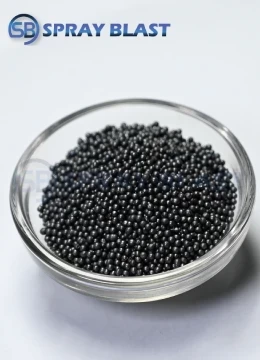
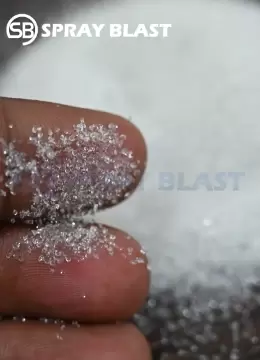
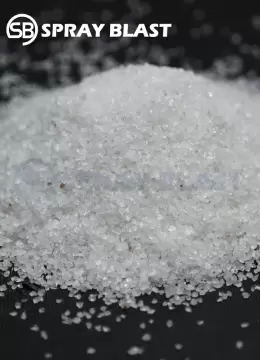
Ceramic beads are a zirconia-based blasting media that is melted, formed into spherical beads, and categorized by grain size. Ceramic beads are iron-free and incredibly durable.
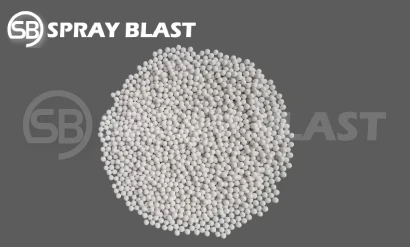
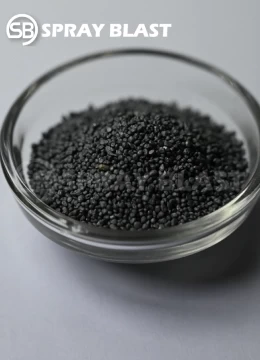
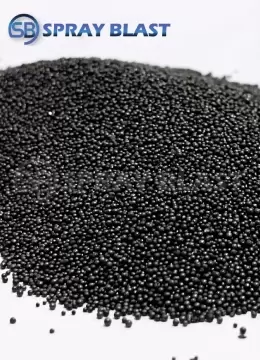
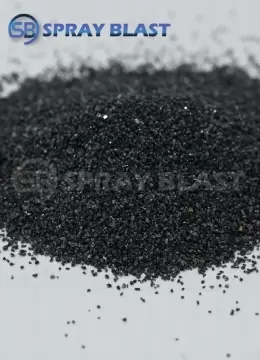
Browse full product photos, component close-ups, and application views.
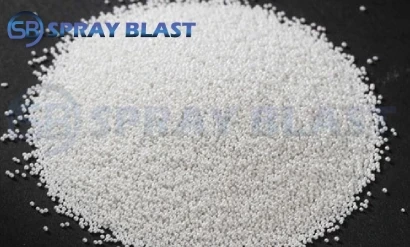
Review the key product specifications used for quotation and application planning.
Ceramic beads are a zirconia-based blasting media that is melted, formed into spherical beads, and categorized by grain size. Ceramic beads are iron-free and incredibly durable.
Ceramic Beads ceramic beads are matched to the required peen intensity.
Beads are charged into the wheel or air peening system.
Hard spheres transfer energy for cleaning or controlled peening.
Passes overlap so the surface receives even treatment.
Broken beads are separated so remaining media stays in spec.
Finish and intensity are checked against the process sheet.
Ceramic beads are an iron-free blasting media that may deliver tiniest roughness. For the cause certain it is inactive & spheroidal, it is suitable for non-aggressive sand blasting machine operation of stainless steel & aluminum. Abrasive media is reusable, delivers little dust, & is frequently engaged to sweeten the aesthetics of the surface.
Ceramic beads feature a sufficient & uniform microstructure, high density, a smooth & non-abrasive surface, outstanding mechanical capabilities, & extremely good wear resistance. These characteristics enable great efficiency when microgrinding & dispersing a wide scope of industrial goods, including paints, inks, pigments, mineral fillers, magnetic coatings, & agrochemicals. The optimal blend of crystalline monoclinic zirconia & amorphous-phase silica improves both performance & durability. Another grade of ceramic beads in India was created particularly for impact surface treatment. These beads' elevated mechanical resistance ensures consistent interpretation & encourages good working conditions owing to their decreased dust emission. Ceramic beads are impermeable to moisture & flow freely without agglomerating. They are chemically inert & don't contaminate the surface certain is existing treated. Ceramic beads are particularly suggested for treating stainless steel, nonferrous metals, & some composites. A particular grade certain fulfills aerospace requirements is utilized for shot peening machine operation in production & maintenance, as well as for peening light alloy parts.
Shot peening along challenging media on a metallic foundation is a common method to accept a controlled surface roughness, as well as to induce constrict residual pressures. Abrasive media size is generally from 10-1000m, and they are able to metallic shots, glass, & ceramic beads media. Ceramic beads are selected when elevated hardness & no metallic pollution are required, & provide a significantly more comprehensive lifetime than glass bead media. Standard ceramic media include a density of 3.9g/cc and a Vickers hardness of 700HV. While hardness proportion of media to a substrate is a fundamental parameter for shot peening, it could be valuable to utilize existing more difficult media. Thus, more increased hardness & more increased density ceramic media along a size of 400 – 1200m were given a rare years ago, with a thickness of 6.2g/cc comparable to metallic media & a hardness of nearly 1200HV.
The use of proper media for shot peening has been explored for numerous years and confirmed attraction to increase the lifetime of the regaled elements. For illustration, deterioration resistance was represented to be improved on TA6V; exhaustion resistance was again enriched on an aluminum alloy & steel. Further, these studies evaluated either conventional ceramic shots along medium density (3.9g/cc) & hardness (700HV), & metallic shots. The use of more suitable, denser, & more inflexible ceramic media is consistent to be examined.
Ceramic blasting media is a solid sphere abrasive made from pure zirconium that is used in dry or wet blasting machine operations. In the succeeding, we evaluate a further ceramic media along boosted density (6g/cc), hardness (1250HV) & sizes of 300m & below. In order to estimate the attraction for an extensive scope of employment, a selection of alloys was assessed, with very wide hardness levels, from aluminum to carburized steel.
Heightened density, fine ceramic shots Microshot YZ (Saint-Gobain) were tested for shot peening utilization. The specified Almen intensities approximate low to moderate pressure: from 1 to 2.5 bar.
Shot peening tests were accomplished on flat samples: aluminum 7075-T6, titanium TA6V, AISI1070 (45-48HRC) steel, & 16MnCr5 carburized steel. We used a suction blasting cabinet coliseum DF1000 for 100m & 50m media, & a direct pressure coliseum PF1500 for larger media. The Almen intensity was controlled with standard N & A Almen strips. For all tests, the coverage rate was 200%.
Spherical ceramic beads are produced utilizing a 50 wt% alumina breather along 0.04 wt% polyacrylate dispersant when the slurry's viscosity is less than 0.3 Pa s, the exterior pressure of the gelling resolution is less than 50 mN/m, & the sand blasting nozzle tip is less than 3 cm from the reacting solution. The sol-gel process for generating alumina beads from alginates may be used to any ceramic material, modifying its chemical composition while managing the microstructure & form of the beads. Furthermore, a second methodology for constructing beads that were more than 5 mm in diameter was developed. Several varieties of aluminum beads, including oblate, prolate, & tri-axial, were created using the vibration technique, along varying sizes & porosity levels.
This method employed 82.7 wt% alumina powder distributed in 17.3 wt% water, 0.8 wt% ammonium salt dispersion, and 0.2 wt% polyvinyl alcohol (PVA) binder. Behind parching the alumina slurry, the combination creates a paste that is reasonably solid at rest while begins to float when subjected to pressure. To create beads, put the alumina paste in a vibrating tableland along the appropriate moisture level (~9 wt% water) within enclosures.
We are one of the leading ceramic beads manufacturer and also supplier of ceramic blasting media all over India. Ceramic beads price depends on the size and quality of ceramic blasting media in India. Our ceramic beads price is low compared to others. We also offer all type of sand blasting machine, sand blasting cabinet, portable sand blasting machine, internal pipe blasting equipment, sand blasting hopper, automatic sand blasting machine, remote control valve, sand blasting nozzle, sand blasting helmet, thermal spray gun, thermal spray wire, abrasive media etc.
Compare Ceramic Beads with other models in Abrasive Media.
| Specification | Mild Steel Shot | This model Ceramic Beads | Tungsten Carbide Grit |
|---|---|---|---|
| Product | Mild Steel Shot | Ceramic Beads | — |
| Size | 0.3-2.5 mm | — | — |
| Hardness | 40-50 HRC | — | — |
| Density | 7.85 g/cm3 | — | 15.63 g/cm3 |
| Color | Grey, Black | White | Black |
| Brand | Spray Blast | Spray Blast | Spray Blast |
| Country | India | India | India |
| Delivery Time | 7-10 Days | 7-10 Days | 5-7 Days |
| Packaging Size | 25kg / 50kg/ 1 ton jumbo bag | 25kg / 50kg/ 1 ton jumbo bag | — |
| Delivery Type | Ship/Air/Land | Ship/Air/Land | — |
| Price Range | Rs 65/KG-100/KG | Rs 20-25/kg | Rs 2.5K- 5K/kg |
| Grain Shape | — | Spherical | — |
| Bulk Density | — | 2300kg/m3 | — |
| Specific Gravity | — | 3.85g/cm³ | — |
| Hardness (HTC) | — | 65 | — |
| Melting Point | — | approx. 2100ºC | — |
| Grain Size (μm) | — | 63-850 | — |
| Packaging Type | — | Bag & Drums | Bag & Drums |
| Material | — | — | Tungsten Carbide |
| Form | — | — | Grit |
| Nickel Powder | — | — | 99.99% |
| Grade | — | — | Technical |
| Usage | — | — | Industrial |
| Molar mass | — | — | 195.85 g.mol-1 |
| Packing Size | — | — | 25kg, 50kg, 1ton |
| Transport Type | — | — | Land / Sea / Air Transport |
Typical applications for Ceramic Beads across industrial blasting, coating, and surface preparation work.
Ceramic Beads transfers energy for fatigue life or a satin finish.
EnquireRound media knocks mill scale without a sharp cut.
EnquireLight edges and tool marks are blended.
EnquireA uniform sheen is left on stainless or aluminum.
EnquireCoverage and intensity are held to a process sheet.
EnquireCastings are cleaned in tumblasts with steel shot.
EnquireStainless shot avoids carbon contamination.
EnquireBead blast hides tool paths on visible faces.
EnquireAnswer a few questions and we will suggest a starting configuration for Ceramic Beads — then confirm the exact specification with our team.
What substrate are you blasting?
What do you need the media for?
Reuse requirement?
Preferred packing?
Order quantity?
Clear answers on specification, usage, and what to expect before you request a quote.
Tell us the application, quantity, and delivery need for Ceramic Beads.
Tell us the product, application, quantity, or repeat supply requirement for steel shot, steel grit, garnet abrasive, glass beads, or related blasting media.