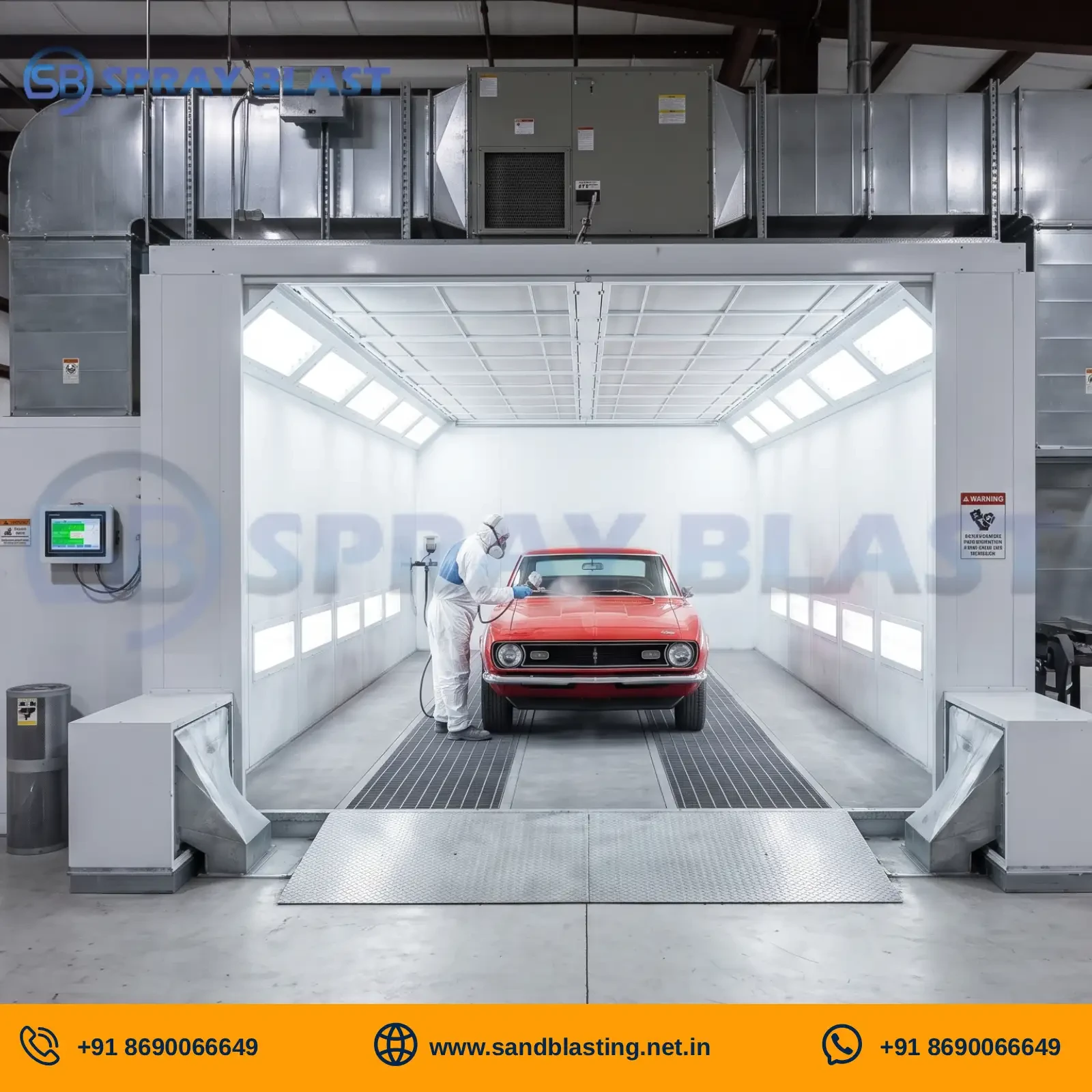
Spray Painting
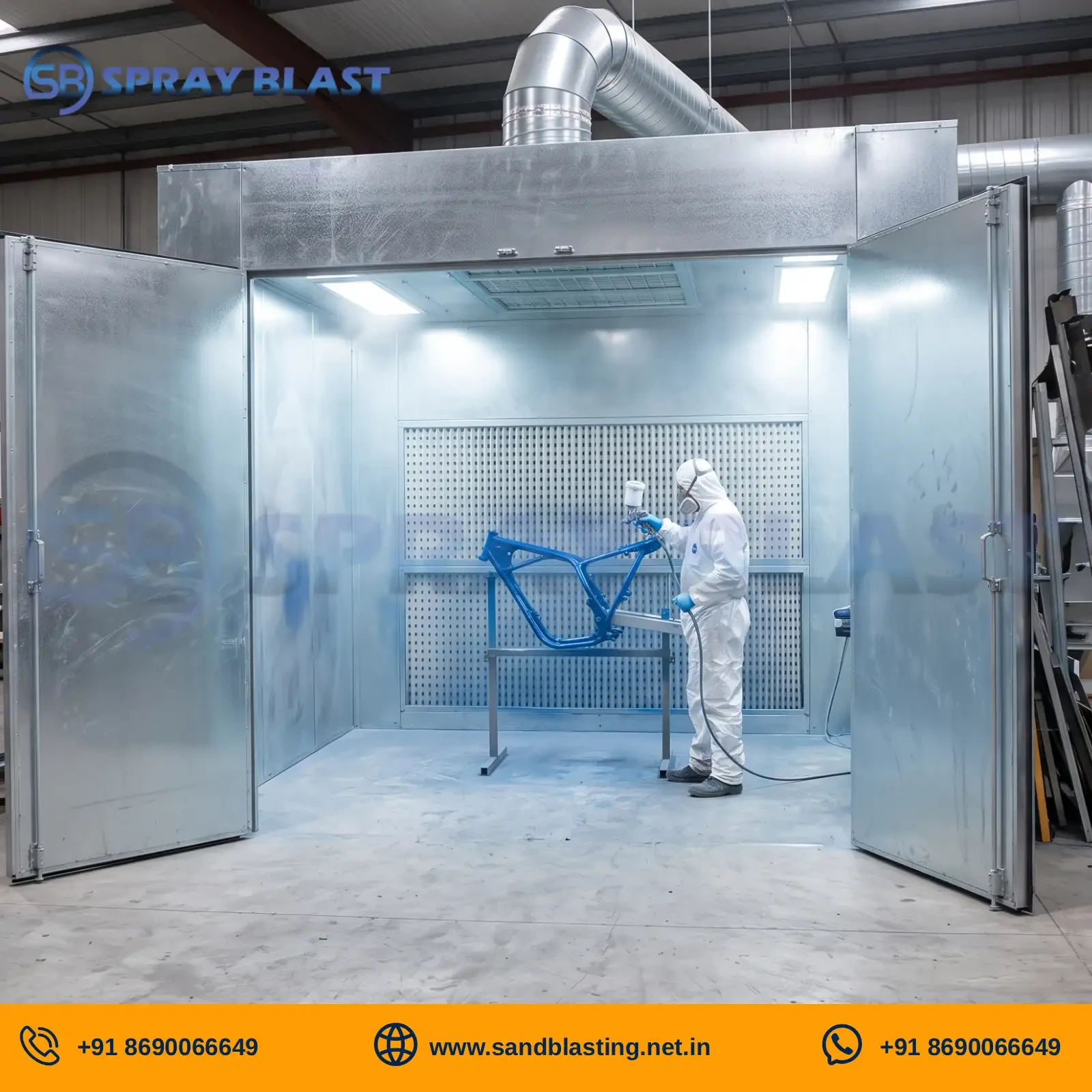
Crossdraft Paint Booth provides a contained zone for primer and finish coats.
EnquirePaint Booth
Achieve consistent, quality finishes with our industrial crossdraft paint booths. Featuring efficient horizontal airflow, they are the ideal budget spray booth for automotive and manufacturing applications.
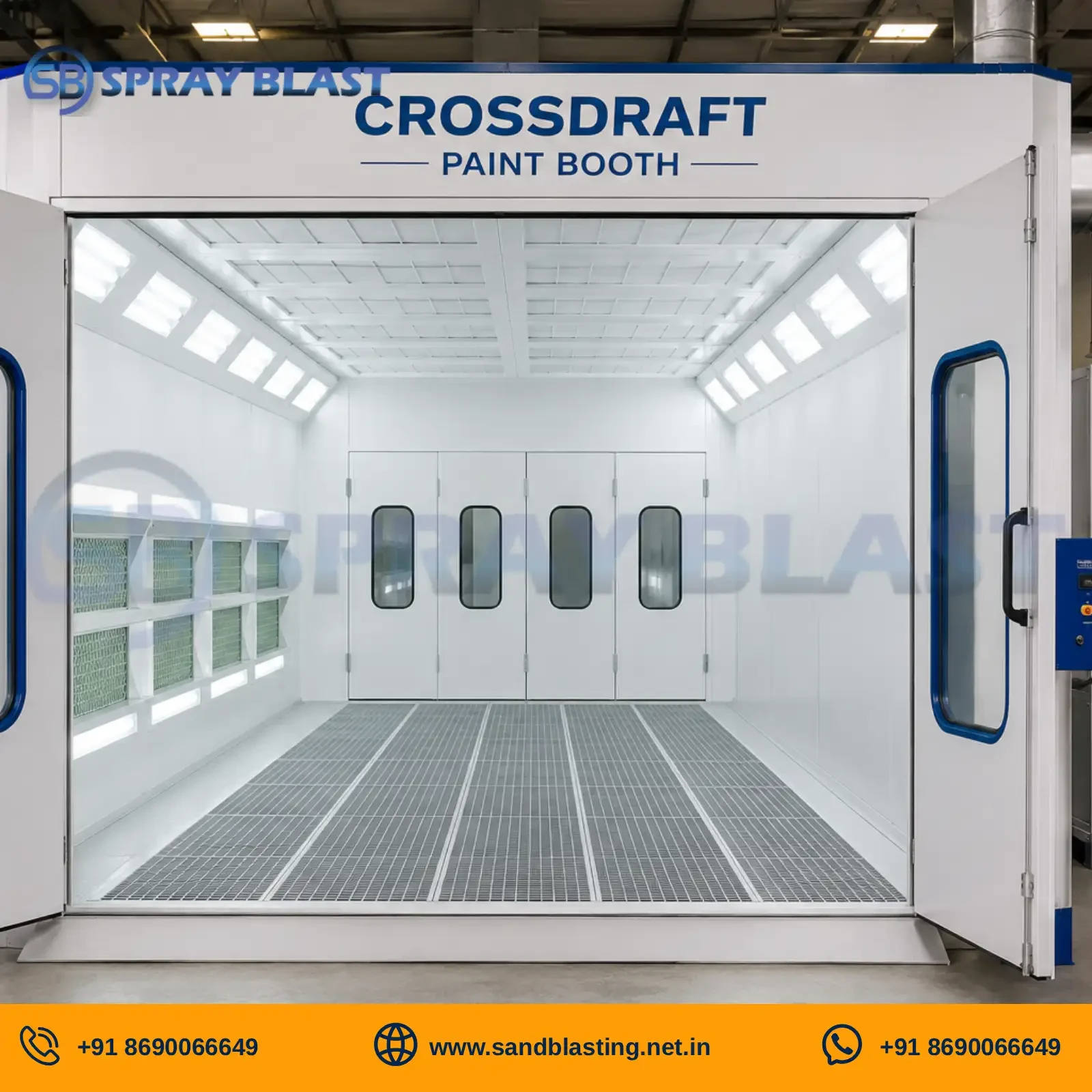
Review the key product specifications used for quotation and application planning.
Achieve consistent, quality finishes with our industrial crossdraft paint booths. Featuring efficient horizontal airflow, they are the ideal budget spray booth for automotive and manufacturing applications.
Parts or vehicles sit in Crossdraft Paint Booth facing the exhaust wall.
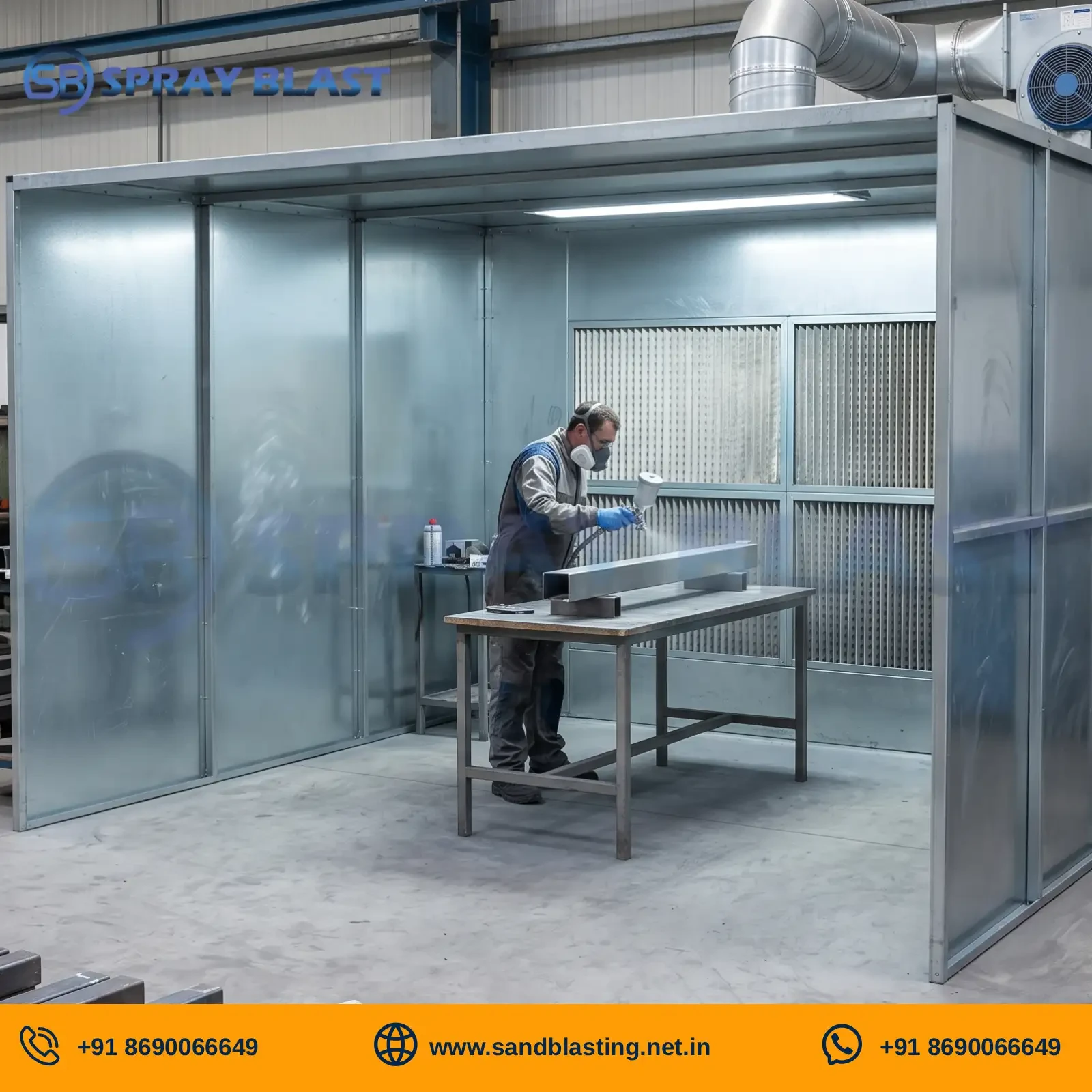
Air moves horizontally from intake filters across the work to exhaust.
Spray is directed so overspray rides the crossdraft away from wet film.
Paint arrestors clean the airstream before discharge.
Intake and exhaust media are replaced to keep velocity even.
The coated job is checked and the booth is cleaned for the next spray cycle.
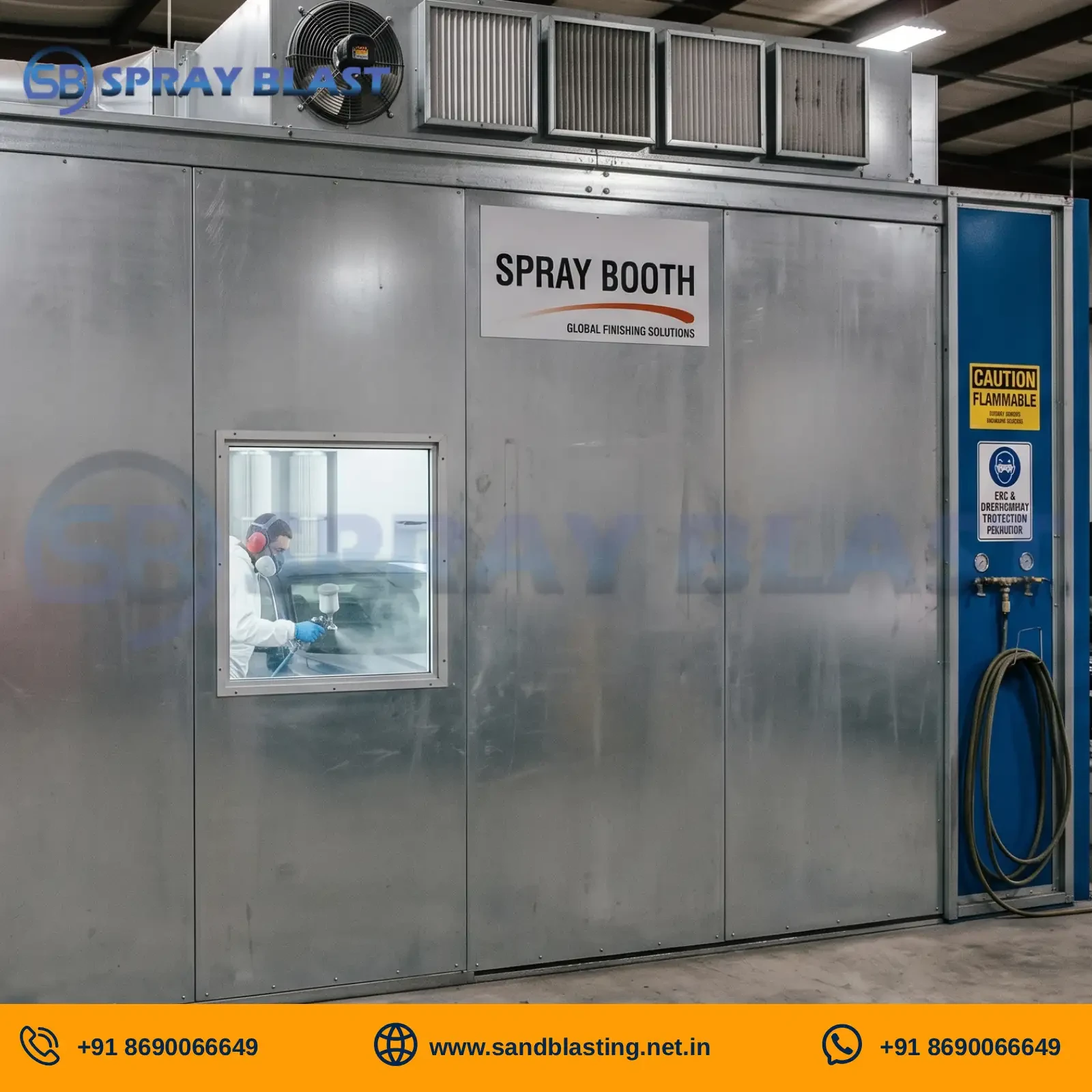
Crossdraft paint booth – This type of paint booth represents the industry standard for efficient, reliable, and cost-effective finishing operations. The crossdraft paint booth uses a horizontal airflow pattern, drawing filtered air through the front of the booth, blowing it parallel to the floor onto the part, and exhausting through a filter bank located in the rear section of the booth. This simple, yet highly effective, paint booth design makes the crossdraft paint booth a practical and economical solution for a variety of finishing applications, from automotive finishing to industrial manufacturing. This paint booth provides a clean, controlled environment, greatly improving finish quality, operator safety, and compliance, making it a choice for businesses looking for maximum value and performance within a reasonable budget.
Our crossdraft paint booths are designed and built to last, providing long-term reliability and performance, with a sturdy, heavy-gauge, galvanized steel construction and precision-engineered components for long-lasting reliability and performance. Our robust crossdraft ventilation system has been optimized to provide a constant airflow, effectively capturing overspray and contaminants, ensuring a superior, Class-A finish with minimal rework. For facility managers and business owners, this means lower capital investment costs, lower operating costs, and increased productivity. Investing in a crossdraft paint booth from us means a smart, strategic investment in your finishing operation, ensuring professional-grade finish quality, day in and day out, and providing a competitive edge in your market.
Review the detailed specifications for our industrial-grade crossdraft paint booth systems. Each booth is engineered for reliability, safety, and superior finishing results, providing an exceptional return on investment.
| Specification | Details |
|---|---|
| Model Series | CDB (Crossdraft Booth) |
| Available Models | CDB-261409, CDB-301409, CDB-301411-H (High Ceiling) |
| Airflow Principle | Crossdraft (Horizontal Airflow) |
| Nominal Airflow | 12,000 - 14,500 CFM (Varies by model) |
| Ventilation System | High-performance direct-drive tubeaxial exhaust fan with a TEFC (Totally Enclosed, Fan-Cooled) motor |
| Filtration System |
Intake: High-capacity 20"x20" panel filters. Exhaust: 20"x20" high-efficiency paint arrestor filters (98%+ capture efficiency) |
| Lighting | Class 1, Division 2 T8 fluorescent light fixtures with clear tempered glass and vapor-proof seals |
| Dimensions (Internal) | Standard: 26'L x 14'W x 9'H to 30'L x 14'W x 11'H. Custom dimensions are available upon request. |
| Main Door Dimensions | 9'4" W x 8'10" H (Standard) |
| Personnel Door | 36" W x 84" H with observation window and safety latch mechanism |
| Power Requirements | 3-Phase, 208V/240V/480V (Specify at time of order) |
| Coating Compatibility | Engineered for use with a wide range of solvent-based and waterborne industrial coatings |
| Compliance Standards | Meets or exceeds NFPA 33, OSHA 1910, and IFC safety standards |
The crossdraft paint booth is based on a simple yet extremely effective principle of horizontal airflow. It is a very effective system after preparing the component in the sand blasting room and establishing a suitable atmosphere for top-notch finishing through proper management of airflow and the capturing of overspray. The entire operation is thoroughly planned to deliver the highest level of efficiency, safety, and meet regulations in the most demanding industries and commercial settings.
The working cycle of a cross-draft ventilation unit is summarized by the following main points:
Due to its simple and reliable mode of operation, the crossdraft paint booth continues to be a cost-effective and handy product, and it finds application in a variety of usages, from automotive refinishing to industrial manufacturing processes. Its horizontal airflow design allows for utmost control of overspray, making this one a very practical and inexpensive means of producing quality finishes.
Each crossdraft booth is an engineered product consisting of several critical components, which all function in harmony to provide the best performance, durability, and compliance with the current standards. To comprehend the performance of the crossdraft booth, it is very important to comprehend the interaction of the components. Our booths are manufactured from high-grade materials, which are chosen based on their durability and ability to produce the finest finish in the future.
| Name | Description | Function | Material | Dimensions (Typical) | Weight (Approx.) | Color |
|---|---|---|---|---|---|---|
| Booth Cabin Panels | Interlocking, pre-punched single-skin or dual-skin insulated panels that form the main structure of the booth. | Creates a sealed, controlled environment for spray finishing, containing overspray and directing the horizontal airflow. | 18-gauge G90 Galvanized Steel, Powder-Coated Finish | Varies by model (e.g., 24" W x 96" H per panel) | Varies by size and insulation | White (Interior), Gray/Blue (Exterior) |
| Filtered Main Doors | Bi-fold or tri-fold doors at the front of the booth, integrated with a full bank of intake filters. | Provides primary access for products/vehicles and serves as the air intake plenum, drawing fresh, filtered air into the booth. | Reinforced Steel Frame, 18-gauge G90 Galvanized Steel | Varies by model (e.g., 9' W x 9' H) | Varies | White (Interior), Gray/Blue (Exterior) |
| Rear Exhaust Plenum | A chamber located at the rear wall of the booth, housing the primary exhaust filters (paint arrestors). | Collects overspray-laden air from the horizontal airflow path before it reaches the exhaust fan and ducting. | 18-gauge G90 Galvanized Steel | Varies, matches the width and height of the booth's rear wall | Varies | White (Interior), Galvanized (Exterior) |
| Tube-Axial Exhaust Fan | A high-volume, non-sparking fan assembly with a TEFC (Totally Enclosed, Fan-Cooled) motor, engineered for hazardous locations. | The core of the crossdraft ventilation system; it creates negative pressure to pull air horizontally through the booth from front to back. | Aluminum/Steel (non-sparking fan), Cast Iron/Steel Motor | Varies by CFM rating (e.g., 24" - 48" diameter) | Varies by size and motor HP | Manufacturer Standard (e.g., Gray, Blue) |
| Lighting Fixtures | High-efficiency, 4-tube fluorescent or LED light fixtures (Class I, Div 2) with tempered glass, sealed and gasketed for safe operation. | Provides bright, color-corrected illumination inside the booth for optimal visibility and high-quality finish application. | Powder-Coated Steel Housing, Tempered Glass | 48" L x 12" W | 25 lbs per fixture | White |
| Control Panel | A centralized UL-listed user interface for operating all booth functions, including an air solenoid valve, motor starter, and light switches. | Allows the operator to safely and efficiently control the spray and cure cycles of the crossdraft paint booth. | NEMA-rated Steel Enclosure | 16" x 12" x 6" | 30 lbs | Gray |
| Filtration System | A complete set of intake panel filters and high-efficiency exhaust paint arrestors. | Ensures incoming air is free of contaminants and that exhaust air meets environmental standards by capturing >99% of paint overspray. | Fiberglass, Polyester, Paper | Standard sizes (e.g., 20"x20" intake, 20"x20" exhaust) | Minimal | White, Green, Blue |
A crossdraft paint booth is a strategic capital investment engineered for operational reliability and regulatory compliance. Its design provides a controlled environment that is essential for achieving high-quality finishes while protecting personnel and adhering to stringent industry standards. For procurement managers and facility operators, this translates to a lower total cost of ownership, enhanced production quality, and a safer, more compliant workplace.
For automotive body shops and collision repair centers, the crossdraft paint booth serves as a high-value workhorse.
In industrial manufacturing, from small components to large fabricated assemblies, finish quality is a direct reflection of brand quality.
For professional woodshops, achieving a flawless, glass-smooth finish is paramount. The horizontal airflow booth provides the necessary control to meet this standard.
Procurement managers, facility operators, and business owners should grasp that making the right equipment choice is not just a matter of picking a tool, but a decision affecting the whole operation and ROI. Follow the below B2B buying tips and avoid troubles buying your crossdraft paint booth.
Selecting the right paint booth is a critical investment decision, directly impacting finish quality, operational efficiency, and budget. The crossdraft paint booth is a popular choice due to its excellent value and straightforward design. To help you make an informed decision, this table compares the crossdraft model against its primary alternatives: semi-downdraft and full downdraft booths.
| Feature / Aspect | Crossdraft Paint Booth | Semi-Downdraft Paint Booth | Downdraft Paint Booth |
|---|---|---|---|
| Price / Investment | Most Economical. Lowest initial capital outlay for equipment and installation. | Mid-Range. Represents a balance between initial cost and enhanced performance features. | Highest Investment. Requires significant capital for the booth and facility modifications (e.g., concrete pit). |
| Performance (Finish Quality) | Good. Delivers a reliable, quality finish suitable for industrial, fleet, and many automotive applications. | Very Good. Improved airflow design reduces the chance of overspray settling on the workpiece, leading to a better finish. | Excellent / Flawless. The industry standard for showroom-quality, contaminant-free finishes. |
| Airflow Principle | Horizontal. Air is drawn through filters in the main doors, flows horizontally across the vehicle/part, and is exhausted at the rear. | Diagonal. Air enters through the ceiling at the front, flows diagonally over the workpiece, and is exhausted at the rear base. | Vertical. Air enters through a full-ceiling plenum, flows vertically down, and is exhausted through a filtered floor pit. |
| Contamination Control | Moderate. Effective for most jobs, but the horizontal airflow can carry overspray and dust across the length of the part. | Good. The angled airflow helps pull contaminants down and away from the surface more effectively than a crossdraft system. | Superior. Gravity and airflow work together to immediately pull overspray and debris down into the floor exhaust, offering the cleanest environment. |
| Durability / Construction | Built with industrial-grade steel and components for long service life. A simpler design means fewer complex mechanical parts. | Robust construction similar to other models, with added complexity in the ceiling intake plenum. | Heavy-duty construction designed for high-production environments. Pit and grate systems must be engineered for heavy loads. |
| Installation & Facility Needs | Simplest. Requires no concrete work or pits, making it ideal for existing buildings or leased spaces. | Moderate. Requires space for a ceiling intake plenum but typically avoids the need for a costly floor pit. | Most Complex. Requires extensive and precise concrete work to construct an exhaust pit, adding significant time and cost to installation. |
| Ideal Target Users | Budget-conscious shops, industrial equipment finishers, large vehicle/fleet refinishers, and entry-level collision repair centers. | High-volume collision repair shops, custom automotive painters, and industrial finishers seeking a higher-quality finish without the cost of a full downdraft. | High-end automotive restoration, aerospace and defense contractors, and any facility where a perfect, contaminant-free finish is mandatory. |
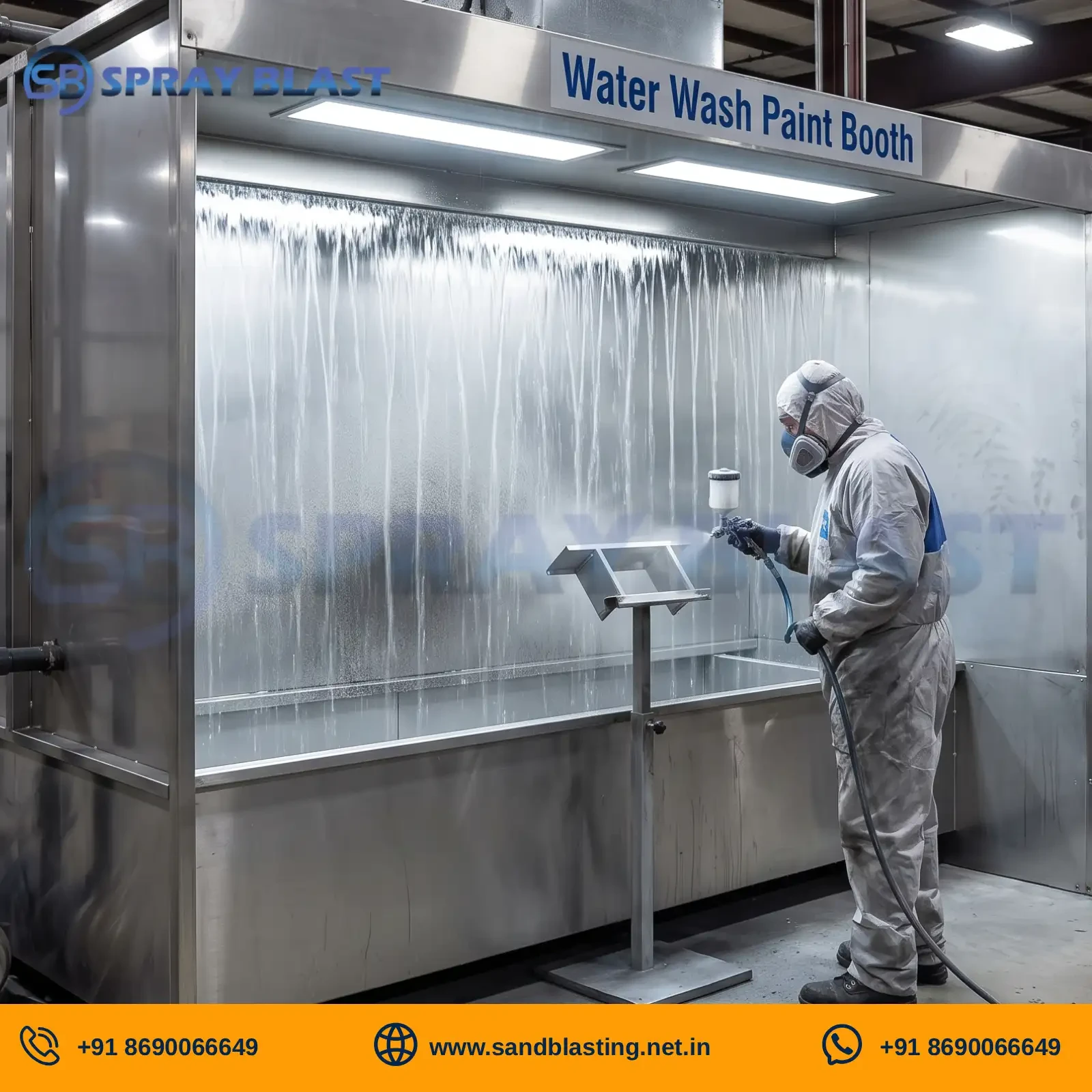
Compare Crossdraft Paint Booth with other models in Paint Booth.
| Specification | Water Wash Paint Booth | This model Crossdraft Paint Booth | Enclosed Paint Booth |
|---|---|---|---|
| Airflow Capacity | 8,000 - 12,000 CFM | — | — |
| External Dimensions (W x H x D) | 10' x 8' x 8' | — | — |
| Internal Working Area (W x H x D) | 9'6" x 7'8" x 6' | — | — |
| Construction Material | 18-Gauge Mild Steel | — | 18-gauge, pre-punched, single-skin mild steel panels; white powder-coated finish (interior/exterior) |
| Water Tank Capacity | 200 Gallons (757 Liters) | — | — |
| Water Pump Motor | 2 HP TEFC Motor | — | — |
| Exhaust Fan Motor | 5 HP Tubeaxial Fan | — | — |
| Filtration Efficiency | >99% particulate overspray capture | — | — |
| Lighting | 4 x T8 LED Fixtures (Class I, Div 2) | Class 1, Division 2 T8 fluorescent light fixtures with clear tempered glass and vapor-proof seals | Class 1, Division 2 explosion-proof LED light fixtures; 100-150 ft-candles illumination |
| Paint Compatibility | Solvent-based, Water-based, Primers, Enamels, Urethanes, Epoxies | — | — |
| Application System Compatibility | HVLP, Airless, Air-Assisted Airless, Electrostatic, Robotic Applicators | — | — |
| Control Panel | NEMA 12 Control Panel with motor starters, light switches, and airflow monitoring | — | UL/ETL listed industrial control panel with motor starters, airflow control, and digital temperature display |
| Compliance Standards | Designed to meet or exceed NFPA 33, OSHA 1910, and IFC standards | Meets or exceeds NFPA 33, OSHA 1910, and IFC safety standards | — |
| Country of Origin | Manufactured in India | — | Manufactured in the USA with globally sourced components |
| Brand | Spray Blast | Spray Blast | Spray Blast |
| Country | India | India | India |
| Packaging | Customized | Customized | Customized |
| Transport | Local Transport | Local Transport | Local Transport |
| Price Range | Rs 8 Lakh - 10 Cr. | Rs 8 Lakh - 10 Cr. | Rs 8 Lakh - 10 Cr. |
| Model Series | — | CDB (Crossdraft Booth) | EPB-2000 (Standard), EPB-3000 (Pressurized), EPB-4000 (Climate-Controlled) |
| Airflow Principle | — | Crossdraft (Horizontal Airflow) | — |
| Nominal Airflow | — | 12,000 - 14,500 CFM (Varies by model) | — |
| Ventilation System | — | High-performance direct-drive tube axial exhaust fan with a TEFC (Totally Enclosed, Fan-Cooled) motor | — |
| Dimensions (Internal) | — | Standard: 26'L x 14'W x 9'H to 30'L x 14'W x 11'H. Custom dimensions are available upon request. | — |
| Main Door Dimensions | — | 9'4" W x 8'10" H (Standard) | — |
| Personnel Door | — | 36" W x 84" H with observation window and safety latch mechanism | — |
| Power Requirements | — | 3-Phase, 208V/240V/480V (Specify at time of order) | 208V/230V/460V, 3-Phase, 60Hz; specific requirements vary by model and options |
| Coating Compatibility | — | Engineered for use with a wide range of solvent-based and waterborne industrial coatings | — |
| External Dimensions (L x W x H) | — | — | Standard sizes range from 24' x 14' x 9' to 40' x 16' x 12'; custom sizes available |
| Internal Working Dimensions (L x W x H) | — | — | Standard sizes range from 23'6" x 13'6" x 8'6" to 39'6" x 15'6" x 11'6" |
| Airflow System | — | — | Downdraft, Semi-Downdraft, or Crossdraft configurations; 12,000 - 28,000 CFM (Cubic Feet per Minute) |
| Filtration System | — | — | 3-Stage: Pre-filter (G3), Ceiling Intake Filter (F5), Exhaust Filter (Fiberglass Paint Arrestor) |
| Heating & Curing System | — | — | Optional: Direct-fired natural gas or propane air makeup unit (AMU) for pressurized and climate-controlled models |
| Personnel & Vehicle Doors | — | — | Tri-fold main doors with observation windows; one personnel door with observation window and panic latch |
| Compliance | — | — | Designed to meet or exceed NFPA 33, OSHA, and IFC standards |
| Compatibility | — | — | Suitable for solvent-based and waterborne coatings, primers, and clear coats |
Typical applications for Crossdraft Paint Booth across industrial blasting, coating, and surface preparation work.
Crossdraft Paint Booth provides a contained zone for primer and finish coats.
EnquireFilters or a water curtain capture paint solids from the airstream.
EnquireFabrications, vehicles, or components are coated under controlled lighting.
EnquireCoated work flashes or bakes according to the booth setup.
EnquireFirst coats are sprayed with stable airflow and clean filters.
EnquireOld equipment is refinished inside a contained spray envelope.
EnquireBooth lighting supports consistent color checks during spray.
EnquireEnclosed airflow helps meet site rules for solvent coatings.
EnquireAnswer a few questions and we will suggest a starting configuration for Crossdraft Paint Booth — then confirm the exact specification with our team.
What will you paint or coat?
Coating process?
Preferred airflow style?
Heating requirement?
Installation type?
Clear answers on specification, usage, and what to expect before you request a quote.
Tell us the application, quantity, and delivery need for Crossdraft Paint Booth.
Tell us the product, application, quantity, or repeat supply requirement for steel shot, steel grit, garnet abrasive, glass beads, or related blasting media.