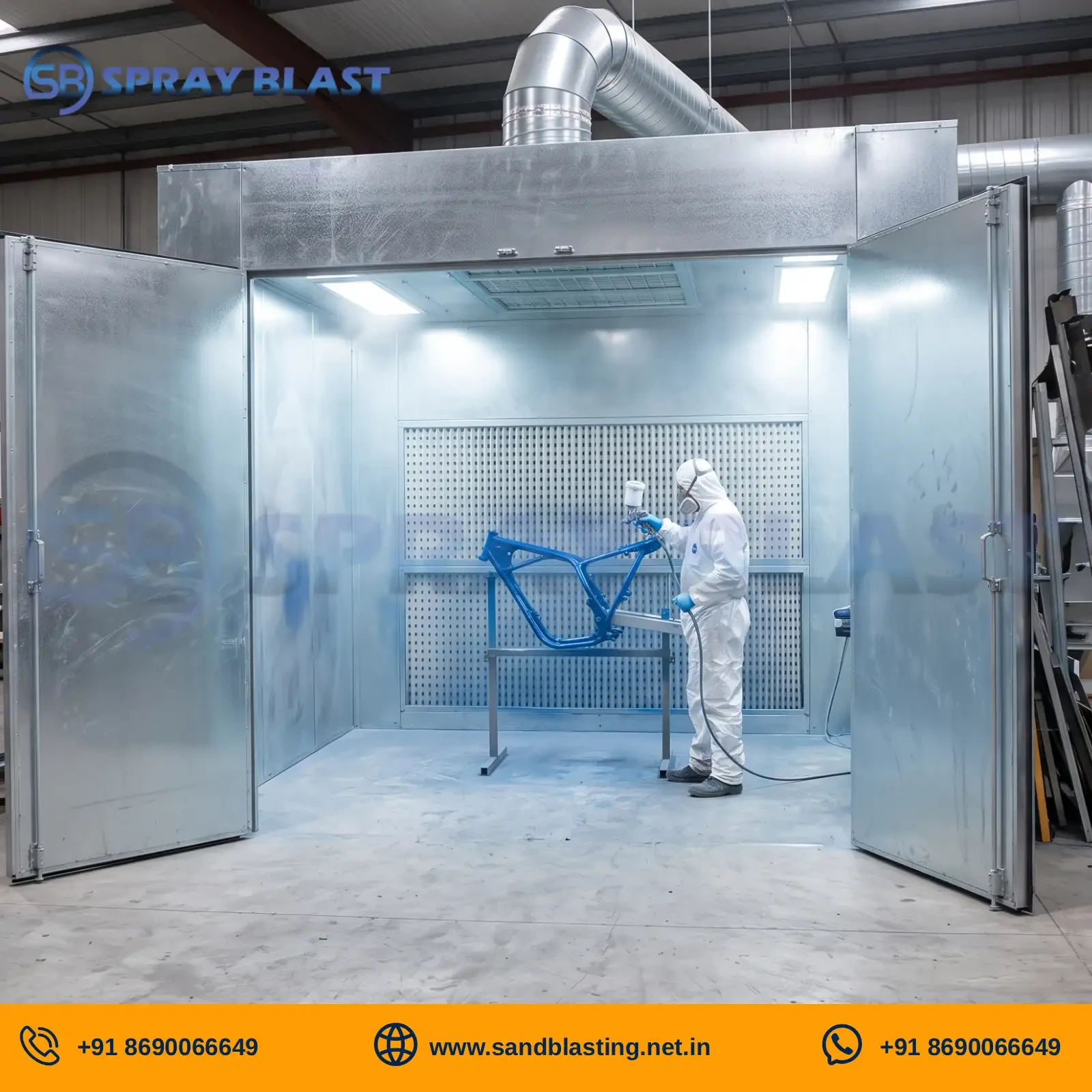
Small Component Cleaning
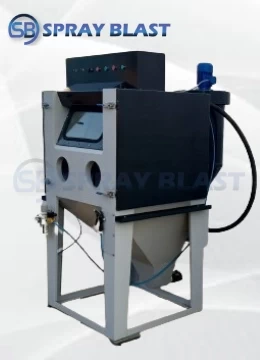
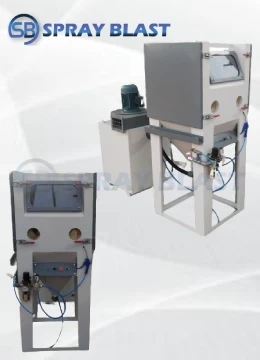
Pressure Blasting Cabinet blasts parts that fit the grate and gloves.
EnquireSand Blasting Cabinet
The pressure blasting cabinet operates on direct pressure generated by a blasting system. A high abrasive velocity produced by a pressure sandblaster results in a speedier completion of the job. A pressure container for automatic abrasive replenishment systems is positioned beneath the hopper of a
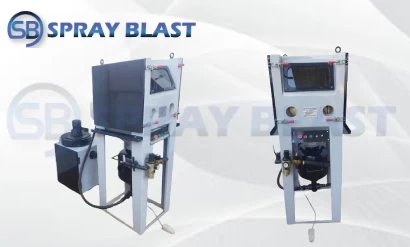
Browse full product photos, component close-ups, and application views.
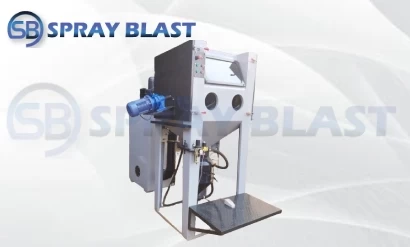
Review the key product specifications used for quotation and application planning.
Watch how the machine performs in real blasting and surface preparation conditions.
The pressure blasting cabinet operates on direct pressure generated by a blasting system. A high abrasive velocity produced by a pressure sandblaster results in a speedier completion of the job. A pressure container for automatic abrasive replenishment systems is positioned beneath the hopper of a
Pressure Blasting Cabinet uses a pressure vessel under the cabinet to push media.
The pot is closed and brought up to blast pressure.
Abrasive and air are combined and sent to the cabinet nozzle.
Higher energy cleaning or profiling is done through the gloves.
The pot is vented before opening for refill.
The collector keeps the cabinet window and air clean.
The pressure blasting cabinet operates on direct pressure generated by a blasting system. A high abrasive velocity produced by a pressure sandblaster results in a speedier completion of the job. A pressure container for automatic abrasive replenishment systems is positioned beneath the hopper of a sand blasting cabinet. As a standard feature, a tubular fabric bag dust collector with a large filter area is mounted to the blaster cabinet for maximum efficiency dust collection. For shaking, a normal shaker is provided. A high-pressure sandblaster cabinet is proposed for high-speed cleaning, corrosion removal, and severe rust removal with coarse abrasives.
A pressure blasting cabinet is a type of equipment used in abrasive blasting or sand blasting machine operations. It is a sealed container that is used to blast surfaces with high-pressure abrasive materials, such as sand, glass beads abrasive, or aluminum oxide, to remove coatings, rust, and other types of surface contaminants.
The pressure blasting cabinet typically consists of a chamber made of steel or other durable material, a blasting gun or nozzle, a media storage hopper, and an air compressor. The blasting gun is connected to the hopper, which holds the abrasive material, and to the air compressor, which supplies the air pressure needed to blast the abrasive material onto the surface being cleaned.
The media is contained in the pressure pot, which is pressurized as it is energized with compressed air. When the air/media mix is released from the pot, it travels at least 5-10 feet through the hose and then considerably quicker through the Venturi of the sand blasting nozzle. The air/media mix acceleration rates are substantially higher in pressure blasting than in suction blasting.
When the media in the pressure pot runs out, it must be depressurized before it can be refilled. Pressure blasting techniques are far more efficient than suction blasting cabinet systems. Pressure systems can blast all media regardless of weight or size, but they must be operated at a minimum of 25 psi.
The pressure blasting cabinet is used in a variety of industries, including automotive, aerospace, and manufacturing, to clean and prepare surfaces for painting, welding, or other processes.
The pressure blasting cabinet works by using compressed air to force abrasive material out of a blasting gun or nozzle at high velocity onto the surface being cleaned or prepared. The abrasive material, such as sand or steel shot, impacts the surface and removes coatings, rust, or other types of contaminants.
Here are the steps involved in the working of a pressure blasting cabinet:
It is important to use the proper abrasive material and pressure settings to avoid damaging the surface being cleaned or prepared.
Pressure blasting cabinets are used for various surface preparation and cleaning applications, such as removing rust, paint, and other contaminants from metal parts. Here are some features of pressure blasting cabinets:
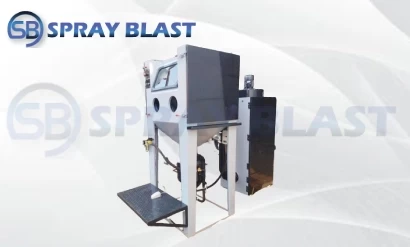
Compare Pressure Blasting Cabinet with other models in Sand Blasting Cabinet.
| Specification | Wet Blasting Cabinet | This model Pressure Blasting Cabinet | Suction Blasting Cabinet |
|---|---|---|---|
| Product | Wet Blasting Cabinet | Pressure blasting cabinet | Suction Blasting Cabinet |
| Storage Capacity | 28 - 42 Lit. | 28 - 42 Lit. | 28 - 42 Lit. |
| Slurry Pump Motor | 1 HP | — | — |
| Req. Compressed air (80 psi) | 25 CFM | 55 CFM | 17 - 20 CFM |
| Cleaning Rate | 4 - 15 Sq. Mtr./Hr. | 4 - 20 Sq. Mtr./Hr | 4 - 15 Sq. Mtr./Hr. |
| Nozzle | Tungsten / Boron Carbide | Tungsten / Boron Carbide | Tungsten / Boron Carbide |
| Nozzle Size | 5 - 12 mm | 5 - 8 mm | 6 mm |
| Material | Mild Steel | Mild Steel | Mild Steel |
| Recommended Abrasive Size | 100 Mesh to 700 Mesh | — | — |
| Color | As per client requirement | As per client requirement | As per client requirement |
| Country | India | India | India |
| Brand | Spray Blast | Spray Blast | Spray Blast |
| Delivery Time | 1-2 Weeks | 1-2 Weeks | 1-2 Weeks |
| Production Capacity | 4-5 | 4-5 | 4-5 |
| Packaging Details | Polly Pack With Bubble Packing | Polly Pack With Bubble Packing | Polly Pack With Bubble Packing |
| Transport Type | Land / Sea / Air Transport | Land / Sea / Air Transport | Land / Sea / Air Transport |
| Price Range | Rs 1.50 Lakhs - 4.50 Lakhs | Rs 1.20 Lakh - 5 Lakh | Rs 70 K -3.5 Lakh |
| Dust Collector | — | Fabric Bag / Pleated Filter Type | Fabric Bag / Pleated Filter Type |
| Cabinet Type | — | Pressure Blasting | — |
Typical applications for Pressure Blasting Cabinet across industrial blasting, coating, and surface preparation work.
Pressure Blasting Cabinet blasts parts that fit the grate and gloves.
EnquireClosed-cabinet blasting removes coatings without an open site.
EnquireLocal areas are profiled before coating.
EnquireOperators process batches with reclaiming abrasive.
EnquireLight blast removes burrs on machined parts.
EnquirePrecision parts are masked then blasted in the cabinet.
EnquireR&D parts are finished without a full blast room.
EnquirePumps, valves, and tools are cleaned before inspection.
EnquireAnswer a few questions and we will suggest a starting configuration for Pressure Blasting Cabinet — then confirm the exact specification with our team.
Typical workpiece size?
Preferred blasting process?
Abrasive you plan to use?
Workshop usage?
Dust collection needed?
Clear answers on specification, usage, and what to expect before you request a quote.
Tell us the application, quantity, and delivery need for Pressure Blasting Cabinet.
Tell us the product, application, quantity, or repeat supply requirement for steel shot, steel grit, garnet abrasive, glass beads, or related blasting media.