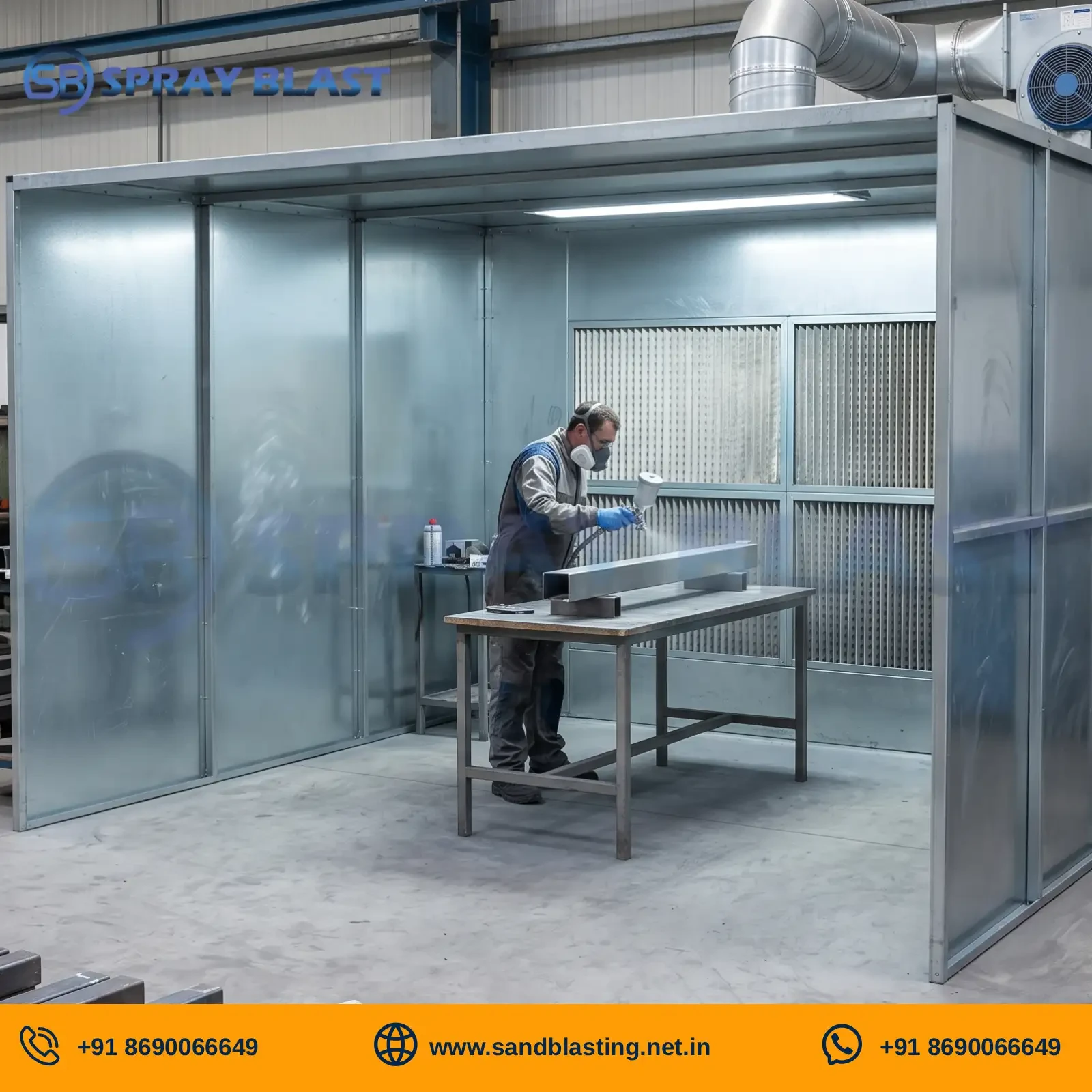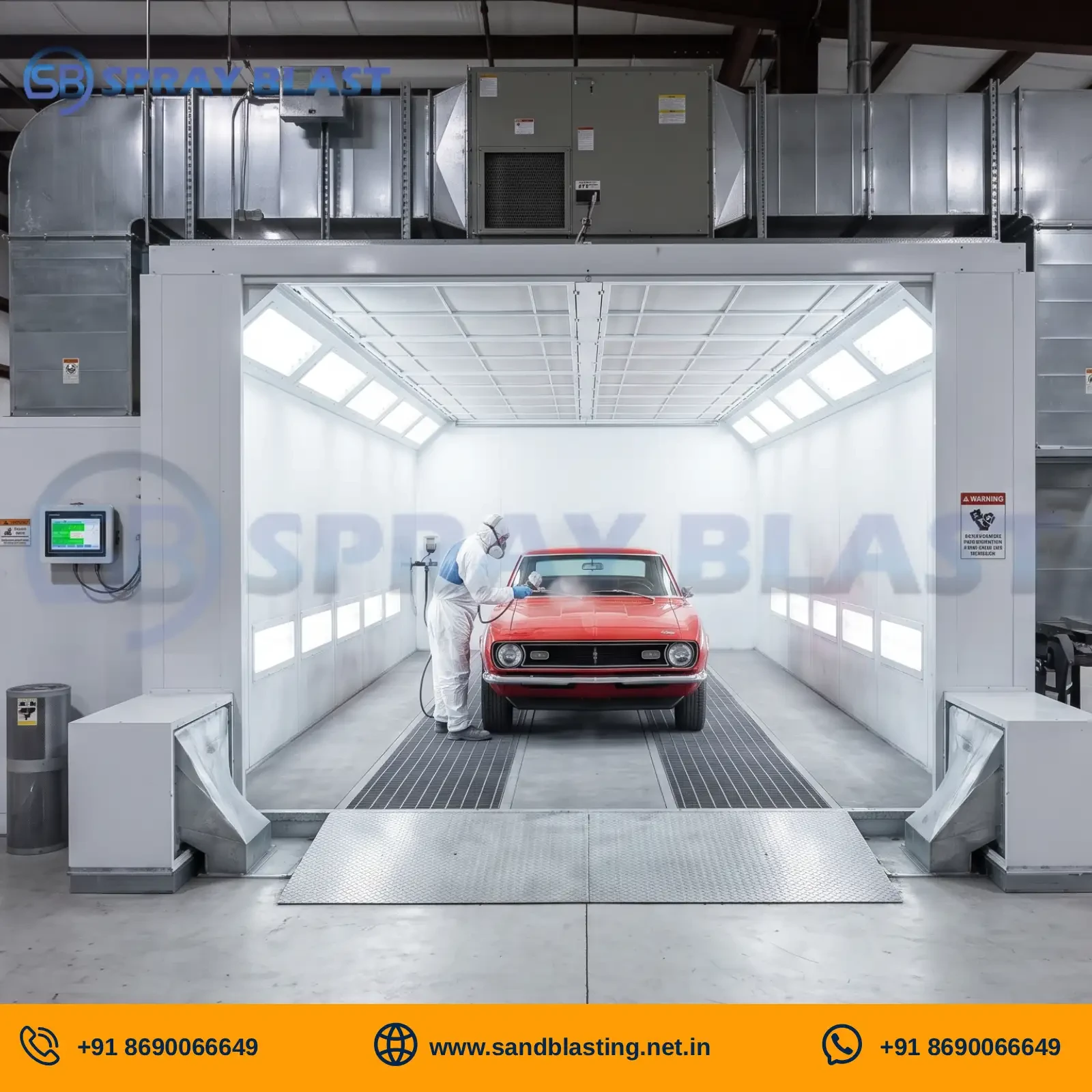
Spray Painting
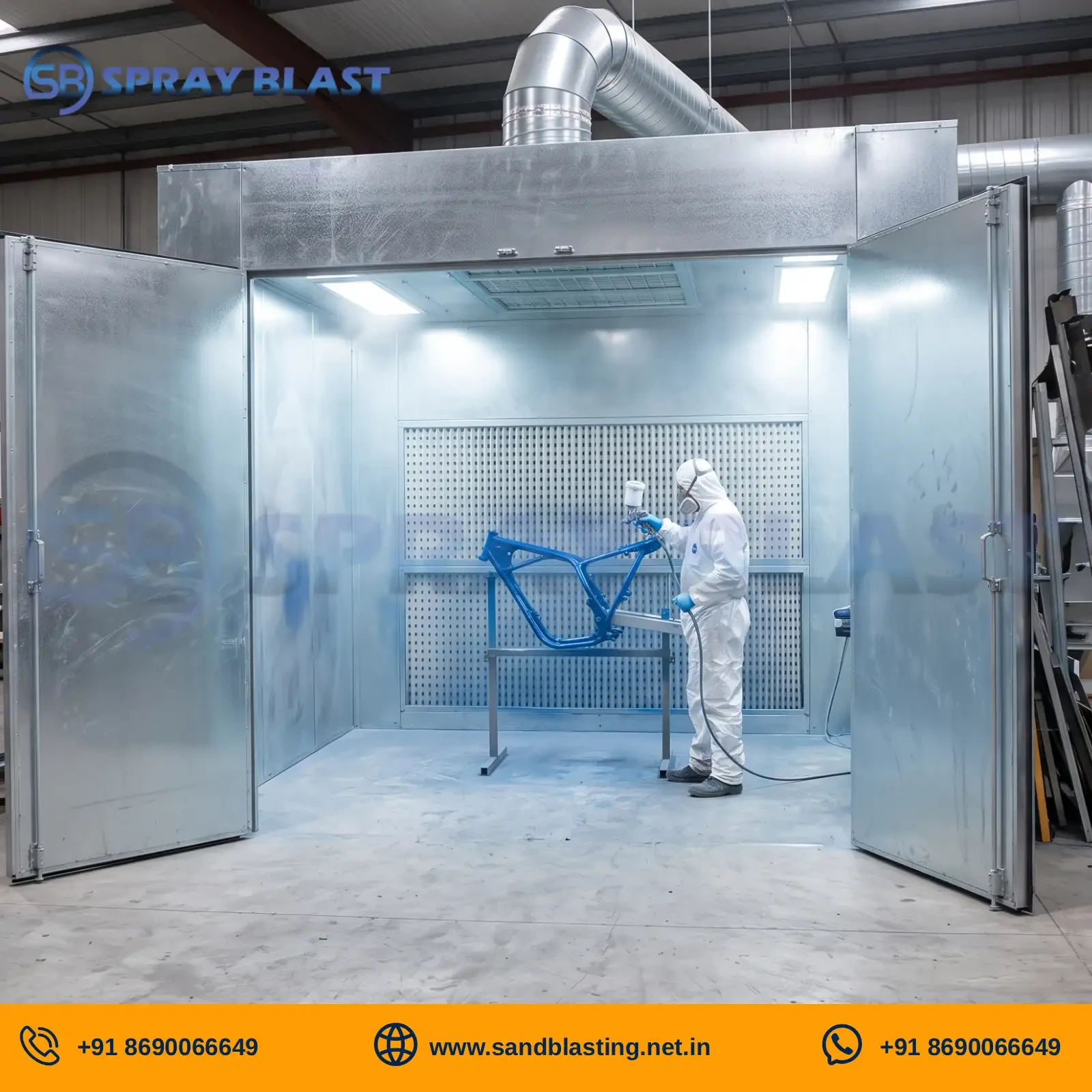
Cleanroom Paint Booth provides a contained zone for primer and finish coats.
EnquirePaint Booth
Achieve pristine, contamination-free finishes with our industrial cleanroom paint booths. Engineered with HEPA filtration for ISO class compliance, ideal for aerospace, electronics, and medical applications. Request a quote today.
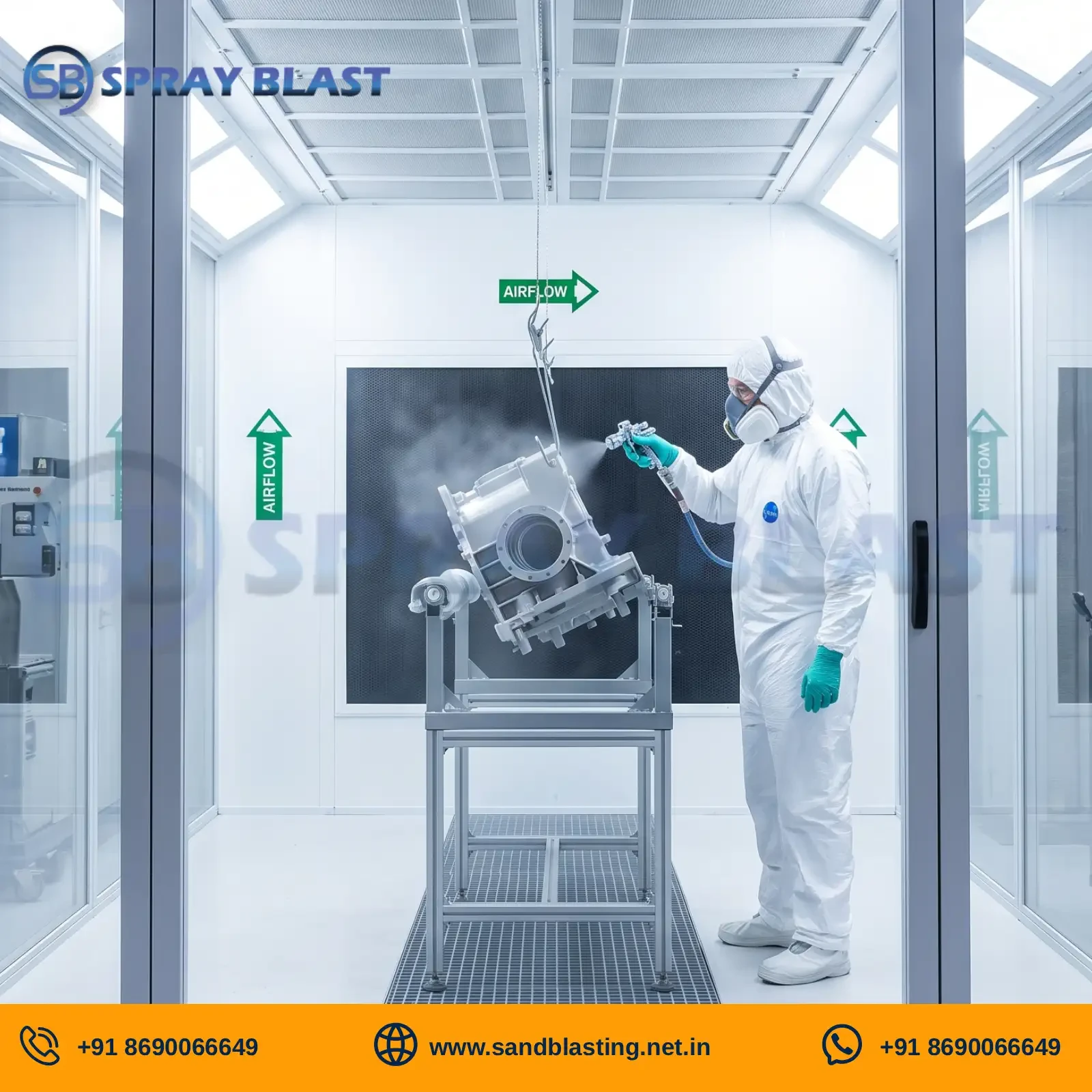
Review the key product specifications used for quotation and application planning.
Achieve pristine, contamination-free finishes with our industrial cleanroom paint booths. Engineered with HEPA filtration for ISO class compliance, ideal for aerospace, electronics, and medical applications. Request a quote today.
Parts and operators enter Cleanroom Paint Booth under the set ISO class.
HEPA supply pushes clean air down or across the spray zone.
Paint is sprayed with low particle generation and strict gun technique.
Overspray is captured without contaminating the clean side of the room.
Gauges confirm the booth stays at the required positive or negative set point.
Finished work leaves through the defined path for cure and quality checks.
Experience the highest level of finish quality and process purity with a high-performance cleanroom paint booth, specifically designed for industries where microscopic contamination can affect the outcome of the entire production run. This is unlike other conventional spray booths that are not precisely engineered to provide a controlled environment where there is no room for contamination. Our cleanroom paint booths use multi-stage HEPA air filtration technology to ensure that there is removal of microscopic particles from the air. As such, any finishing process, whether for aircraft or medical equipment, is done in a controlled environment where everything is guaranteed to turn out perfectly flawless with absolutely no room for any form of defect.
Our cleanroom paint booths are engineered for the demands of the toughest industries. Each unit is built with heavy-gauge powder-coated steel, corrosion-resistant components, and is designed for a very long lifespan with minimal maintenance. The superior performance of our HEPA-filtered cleanroom paint booths means a stronger bottom line for you. By providing the highest level of quality, you can be assured that every finishing operation is done to the highest standard, every time. By using a dedicated ISO class spray booth, you are making a smart business decision to secure a significant competitive advantage.
Our CR-PB-8000 series is designed for precision, compliance, and performance in critical contamination-controlled applications. The list below describes the standard specification, which can be customized to meet your specific operational needs.
| Specification | Model Series: CR-PB-8000 | Details |
|---|---|---|
| ISO Classification | ISO Class 5 to ISO Class 8 (Class 100 to 100,000) | Achievable classification is dependent on the final configuration and operational protocols. |
| Airflow Configuration | Vertical Laminar Down-draft (Standard); Cross-draft available | Provides uniform, non-turbulent air patterns to minimize particle deposition. |
| Air Velocity | 0.3 to 0.5 m/s (60-100 FPM) | Fully adjustable via Variable Frequency Drive (VFD) controls for process optimization. |
| Primary Filtration | Ceiling-mounted HEPA or ULPA Filter Modules | Terminal filters provide final-stage air purification directly into the workspace. |
| Filter Efficiency | HEPA: 99.99% @ 0.3 µm; ULPA: 99.9995% @ 0.12 µm | Exceeds industry standards for particulate removal in sensitive coating applications. |
| Exhaust Filtration | Multi-stage NESHAP-compliant paint arrestors | Captures overspray and VOCs; activated carbon stages available for odor/fume abatement. |
| Construction Material | 304 Stainless Steel or Mild Steel | Heavy-duty, non-shedding, and corrosion-resistant materials suitable for cleanroom use. |
| Wall System | Double-wall, insulated panels with flush-mounted seams | Provides superior thermal/acoustic insulation and a smooth, easy-to-clean interior surface. |
| Standard Dimensions (Internal) | Custom-built to application requirements. Common sizes range from 8'x8'x8' to 40'x20'x16'. | This cleanroom paint booth is designed to accommodate parts of all sizes, from small components to large aerostructures. |
| Lighting | Class I, Div 1/2 Explosion-Proof LED Fixtures | Color-corrected (5000K) for accurate color matching, providing >100 foot-candles at the working surface. |
| Control System | PLC-based with HMI Touchscreen Interface | Centralized control of airflow, pressure, temperature, humidity, and filter loading. |
| Pressure Monitoring | Integrated Magnehelic gauges or digital pressure transducers | Ensures positive pressure differential is maintained to prevent contaminant ingress. |
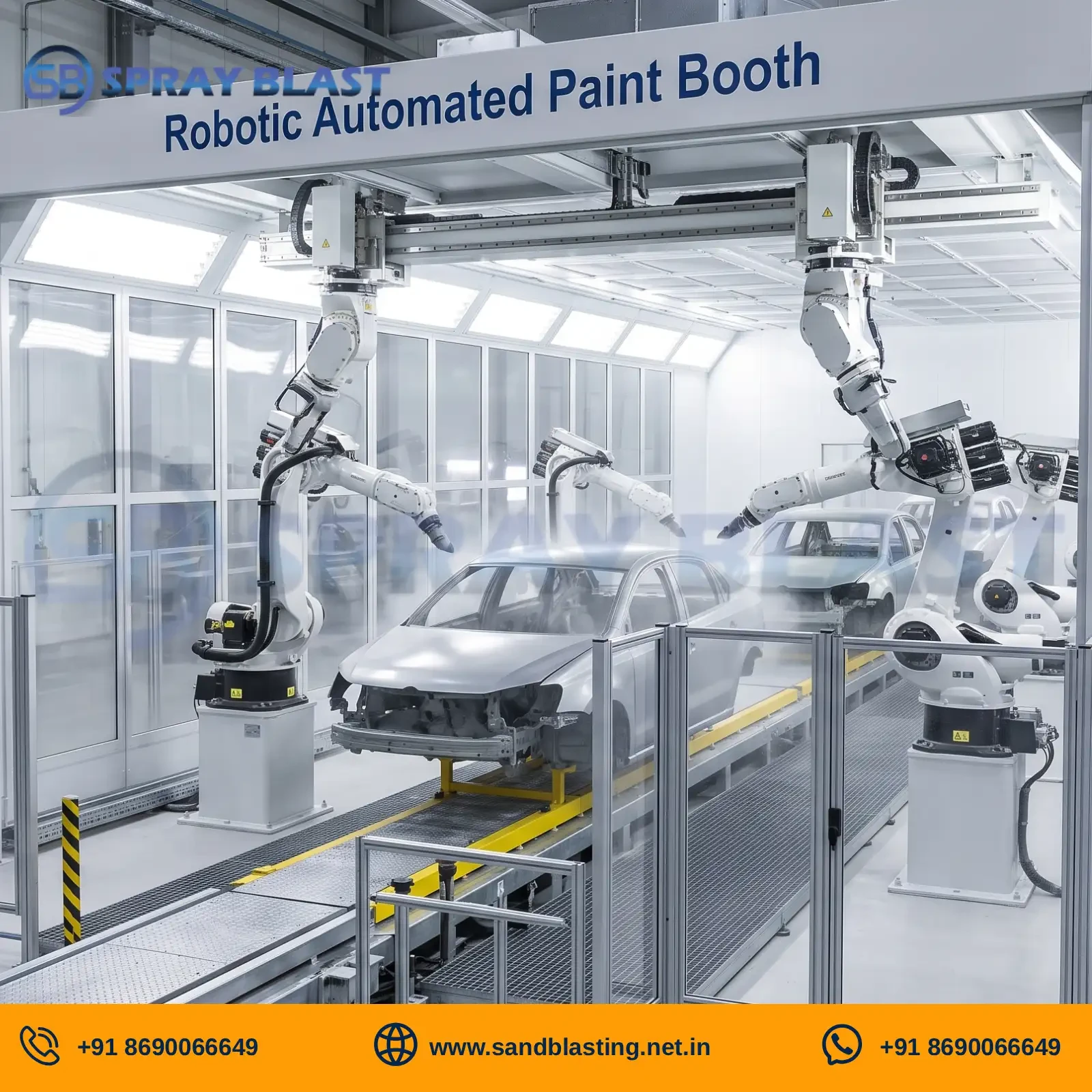
| Compatibility | Robotic & automated spray systems, manual application, all paint chemistries (solvent & waterborne). | Designed for seamless integration with existing or new finishing lines. |
| Country of Origin | Designed, Engineered, and Manufactured in India | Guarantees superior quality control, material traceability, and expert support. |
Cleanroom paint booths are high-tech systems that regulate their environments with extremely tight controls and methods such as staged air filtering, exact air flow manipulations, and constant air pressurization. The outcome of this complex chain is to produce a certified ISO-level clean environment that completely prevents airborne contaminants during the painting stage and guarantees the neatest finish for very delicate parts.
Every component of our cleanroom paint booth is engineered for performance, compliance, and longevity. The system is a sum of its high-quality parts, each selected to ensure a pristine, particle-free finishing environment that meets stringent ISO class standards. Below is a detailed breakdown of the core components that constitute our industry-leading contamination-free booths.
| Component Name | Description | Function | Material | Dimensions (Typical) | Weight (Approx.) |
|---|---|---|---|---|---|
| Insulated Dual-Skin Panels | Interlocking, pre-fabricated wall and ceiling panels with a smooth, non-porous surface and insulating core. | Forms the sealed, pressurized enclosure, preventing particle shedding, maintaining thermal stability, and ensuring laminar airflow. | 18-gauge mild steel | Varies per configuration (e.g., 24" W x 120" H x 2" D). | 5 lbs/sq. ft. |
| Ceiling HEPA Filter Modules | Gel-sealed, high-efficiency particulate air (HEPA) filters are integrated into the ceiling plenum, often as self-powered Fan Filter Units (FFUs). | Delivers ISO 5 (Class 100) or better air by removing 99.99% of particles at 0.3 microns, creating the critical contamination-free zone. | Anodized aluminum frame, micro-glass fiber media. | 24" x 48" x 12" | 60 lbs per unit |
| Air Makeup Unit (AMU) | A dedicated HVAC system that conditions, pressurizes, and pre-filters all incoming air before it enters the booth's HEPA plenum. | Provides precise temperature and humidity control, maintains positive pressure, and supplies conditioned air for optimal coating application and curing. | Weatherproof mild or aluminized steel housing. | Varies based on required CFM (e.g., 120" L x 60" W x 60" H). | 1500 - 4000 lbs |
| Multi-Stage Exhaust Plenum | An integrated exhaust chamber, typically in the floor or rear wall, containing multiple stages of paint arrestor filters. | Captures paint overspray and VOCs, protecting the exhaust fan, ensuring balanced airflow, and maintaining environmental compliance. | 18-gauge mild steel. | Sized to match booth width and required air velocity. | Varies with booth size |
| PLC Control Panel | A UL-Listed, centralized digital interface for managing all operational parameters of the cleanroom paint booth. | Controls and monitors airflow, pressure differentials, temperature, cure cycles, and safety interlocks. Provides data logging for process validation. | NEMA 12 steel enclosure with HMI touchscreen. | 24" W x 30" H x 10" D | 75 lbs |
| Explosion-Proof LED Lighting | Class I, Division 1 rated, high-lumen, color-corrected (5000K) LED light fixtures sealed for hazardous locations. | Provides bright, shadow-free illumination for precise coating application and quality inspection without creating an ignition source. | Cast aluminum housing, tempered glass lens. | 4-foot, 4-tube fixture (50" L x 14" W x 6" H). | 35 lbs per fixture |
| Interlocking Access Doors | Heavy-duty, fully gasketed personnel and equipment doors equipped with safety interlocks and viewing windows. | Allows operator and part entry/exit while maintaining booth pressurization. The interlock system prevents operation when doors are not secure. | Powder-coated steel frame and panel, laminated safety glass. | Varies (e.g., 36" W x 84" H for personnel). | 150 lbs+ |
Our cleanroom paint booth systems are engineered not as commodities, but as integral components of your quality assurance and production framework. For procurement managers and compliance officers in high-stakes industries, the focus extends beyond initial cost to total cost of ownership, process validation, and risk mitigation. We deliver on these requirements through superior engineering and application-specific design.
Aerospace & Defense: If the very essence of a business being aerospace is that failure is at no option, then our aerospace paint booth solutions offer ways of controlling the stringent environments necessary for mission-critical coatings.
Medical Device & Life Sciences: Patient safety and keeping contamination levels at almost zero are the main considerations behind manufacturers of medical devices, and therefore, it is not a surprise that they consider a contamination-free booth as a must-have. Our solutions are perfectly suited to the needs of the life sciences industry.
Semiconductor & Electronics: Tiny particles in microelectronics can be destructible. We offer ISO class spray booth solutions that are capable of shielding sensitive components during one of their major coating step.
The decision to invest in a contamination-free booth using capital funds should be based on thorough planning and careful evaluation of the market options available. Consider these B2B buying tips when purchasing your cleanroom paint booth to be sure it will deliver excellent results, comply with regulations, and operate efficiently under the industrial finishing conditions.
To understand the unique value and specific application of a purpose-built cleanroom paint booth, it is essential to compare it against other common industrial finishing environments. The following table outlines the key differences in performance, investment, and suitability to help you make an informed procurement decision.
| Attribute | Cleanroom Paint Booth | Industrial Spray Booth | Modular Softwall Cleanroom (with Spraying) |
|---|---|---|---|
| Price / Investment | High: Significant initial investment due to specialized materials, advanced filtration, and control systems. Offers the lowest risk of costly rework and product rejection. | Moderate: Lower initial cost, focused on safety and basic overspray capture rather than contamination control. | Variable: Can be lower cost initially, but requires separate integration of spray equipment and may have higher long-term operational costs due to filter contamination. |
| Durability | Excellent: Constructed from non-shedding, non-porous materials like stainless or powder-coated steel. Designed for rigorous cleaning protocols and long-term industrial use. | Good: Typically built with durable galvanized or powder-coated steel, but not designed to prevent particulate shedding or microbial growth. | Low to Moderate: Vinyl curtains are susceptible to punctures, tears, and degradation from cleaning chemicals and solvents, compromising the clean environment. |
| Key Features | Integrated HEPA/ULPA filtration, precise pressure and airflow control, ISO Class certification (e.g., ISO 5-8), sealed light fixtures, interlocking doors, and, on porous surfaces. | Basic exhaust filtration (not HEPA), standard airflow for VOC capture, and explosion-proof lighting. Lacks particulate control and pressurization. | HEPA fan filter units (FFUs) for ambient air, but lack integrated overspray exhaust and airflow management specific to coating processes. |
| Performance | Superior: Delivers a certifiable, contamination-free environment for flawless, high-spec finishes. Prevents airborne particulates from settling on wet surfaces, ensuring maximum first-pass yield. | Poor (for Contamination): Protects the operator and external environment from VOCs but offers no protection against dust, fibers, or other defects in the finish. | Inconsistent: Can provide a clean ambient environment, but the act of spraying introduces overspray and turbulence that can contaminate the room and HEPA filters if not properly engineered. |
| Target Users | Aerospace, medical device, optics, electronics, and semiconductor industries. Manufacturers require certifiable, particulate-free coating environments for mission-critical components. | General manufacturing, automotive refinishing, metal fabrication, and woodworking. Applications where finish perfection is secondary to operator safety and overspray capture. | Assembly or packaging operations. Sometimes adapted for coating as a budget solution, but not ideal for applications requiring consistent, high-quality finishes. |
Compare Cleanroom Paint Booth with other models in Paint Booth.
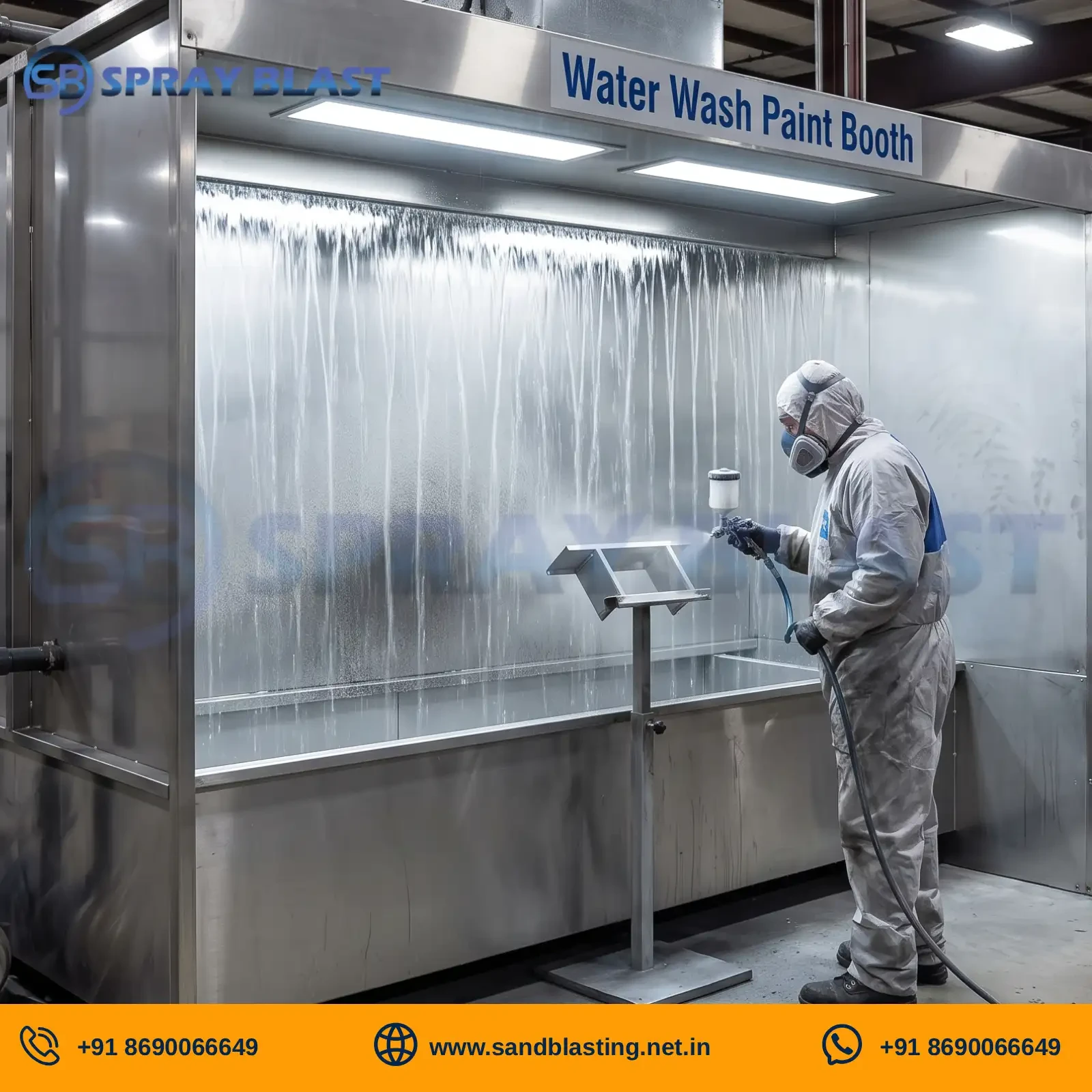
| Specification | Water Wash Paint Booth | This model Cleanroom Paint Booth | Enclosed Paint Booth |
|---|---|---|---|
| Airflow Capacity | 8,000 - 12,000 CFM | — | — |
| External Dimensions (W x H x D) | 10' x 8' x 8' | — | — |
| Internal Working Area (W x H x D) | 9'6" x 7'8" x 6' | — | — |
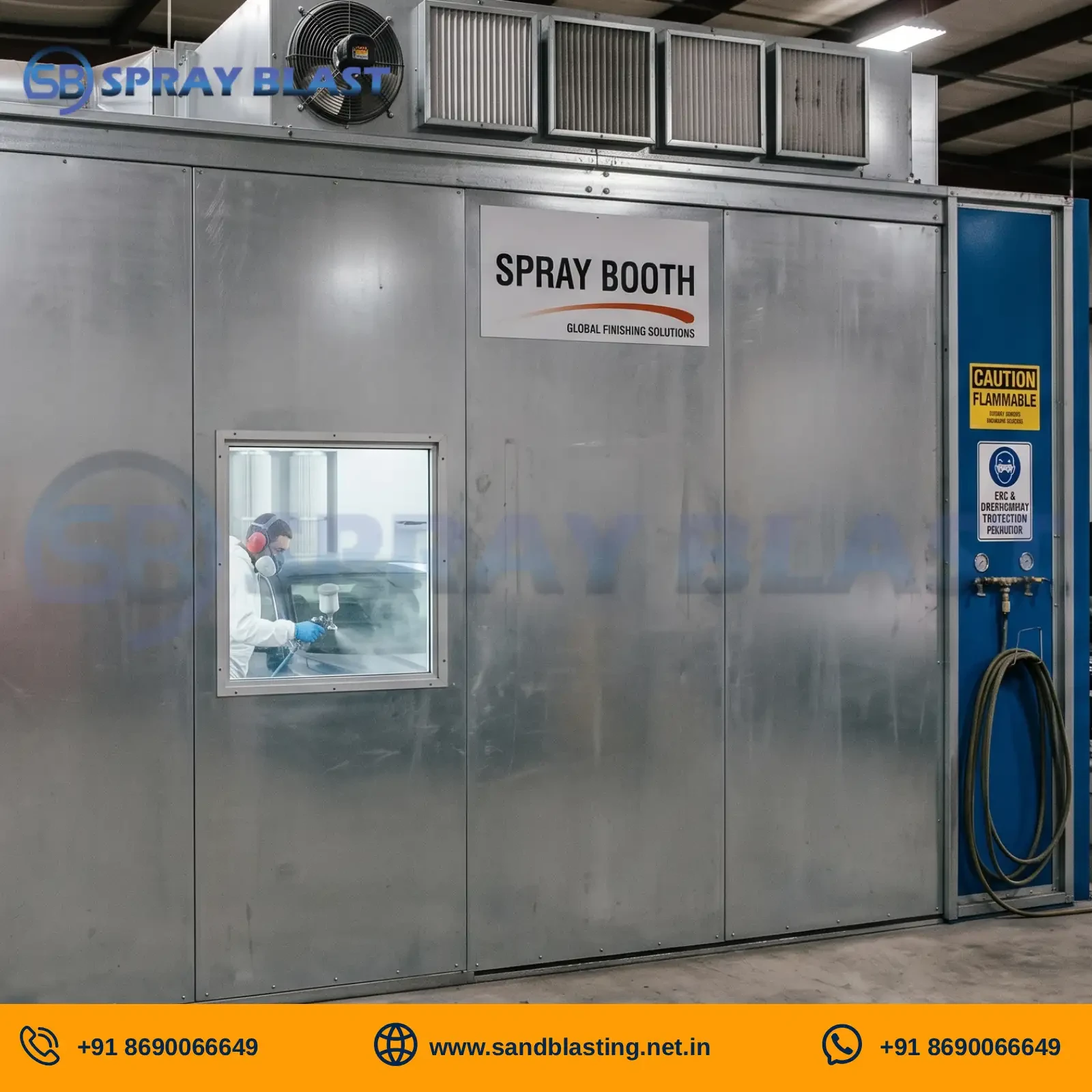
| Construction Material | 18-Gauge Mild Steel | Mild Steel | 18-gauge, pre-punched, single-skin mild steel panels; white powder-coated finish (interior/exterior) |
| Water Tank Capacity | 200 Gallons (757 Liters) | — | — |
| Water Pump Motor | 2 HP TEFC Motor | — | — |
| Exhaust Fan Motor | 5 HP Tubeaxial Fan | — | — |
| Filtration Efficiency | >99% particulate overspray capture | — | — |
| Lighting | 4 x T8 LED Fixtures (Class I, Div 2) | Class I, Div 1/2 Explosion-Proof LED Fixtures | Class 1, Division 2 explosion-proof LED light fixtures; 100-150 ft-candles illumination |
| Paint Compatibility | Solvent-based, Water-based, Primers, Enamels, Urethanes, Epoxies | — | — |
| Application System Compatibility | HVLP, Airless, Air-Assisted Airless, Electrostatic, Robotic Applicators | — | — |
| Control Panel | NEMA 12 Control Panel with motor starters, light switches, and airflow monitoring | — | UL/ETL listed industrial control panel with motor starters, airflow control, and digital temperature display |
| Compliance Standards | Designed to meet or exceed NFPA 33, OSHA 1910, and IFC standards | — | — |
| Country of Origin | Manufactured in India | India | Manufactured in the USA with globally sourced components |
| Brand | Spray Blast | Spray Blast | Spray Blast |
| Country | India | India | India |
| Packaging | Customized | Customized | Customized |
| Transport | Local Transport | Local Transport | Local Transport |
| Price Range | Rs 8 Lakh - 10 Cr. | Rs 8 Lakh - 10 Cr. | Rs 8 Lakh - 10 Cr. |
| ISO Classification | — | ISO Class 5 to ISO Class 8 (Class 100 to 100,000) | — |
| Airflow Configuration | — | Vertical Laminar Down-draft (Standard); Cross-draft available | — |
| Air Velocity | — | 0.3 to 0.5 m/s (60-100 FPM) | — |
| Primary Filtration | — | Ceiling-mounted HEPA or ULPA Filter Modules | — |
| Filter Efficiency | — | HEPA: 99.99% @ 0.3 µm; ULPA: 99.9995% @ 0.12 µm | — |
| Exhaust Filtration | — | Multi-stage NESHAP-compliant paint arrestors | — |
| Wall System | — | Double-wall, insulated panels with flush-mounted seams | — |
| Standard Dimensions (Internal) | — | Custom-built to application requirements. Common sizes range from 8'x8'x8' to 40'x20'x16'. | — |
| Control System | — | PLC-based with HMI Touchscreen Interface | — |
| Pressure Monitoring | — | Integrated Magnehelic gauges or digital pressure transducers | — |
| Compatibility | — | Robotic & automated spray systems, manual application, all paint chemistries (solvent & waterborne). | Suitable for solvent-based and waterborne coatings, primers, and clear coats |
| Model Series | — | — | EPB-2000 (Standard), EPB-3000 (Pressurized), EPB-4000 (Climate-Controlled) |
| External Dimensions (L x W x H) | — | — | Standard sizes range from 24' x 14' x 9' to 40' x 16' x 12'; custom sizes available |
| Internal Working Dimensions (L x W x H) | — | — | Standard sizes range from 23'6" x 13'6" x 8'6" to 39'6" x 15'6" x 11'6" |
| Airflow System | — | — | Downdraft, Semi-Downdraft, or Crossdraft configurations; 12,000 - 28,000 CFM (Cubic Feet per Minute) |
| Filtration System | — | — | 3-Stage: Pre-filter (G3), Ceiling Intake Filter (F5), Exhaust Filter (Fiberglass Paint Arrestor) |
| Power Requirements | — | — | 208V/230V/460V, 3-Phase, 60Hz; specific requirements vary by model and options |
| Heating & Curing System | — | — | Optional: Direct-fired natural gas or propane air makeup unit (AMU) for pressurized and climate-controlled models |
| Personnel & Vehicle Doors | — | — | Tri-fold main doors with observation windows; one personnel door with observation window and panic latch |
| Compliance | — | — | Designed to meet or exceed NFPA 33, OSHA, and IFC standards |
Typical applications for Cleanroom Paint Booth across industrial blasting, coating, and surface preparation work.
Cleanroom Paint Booth provides a contained zone for primer and finish coats.
EnquireFilters or a water curtain capture paint solids from the airstream.
EnquireFabrications, vehicles, or components are coated under controlled lighting.
EnquireCoated work flashes or bakes according to the booth setup.
EnquireFirst coats are sprayed with stable airflow and clean filters.
EnquireOld equipment is refinished inside a contained spray envelope.
EnquireBooth lighting supports consistent color checks during spray.
EnquireEnclosed airflow helps meet site rules for solvent coatings.
EnquireAnswer a few questions and we will suggest a starting configuration for Cleanroom Paint Booth — then confirm the exact specification with our team.
What will you paint or coat?
Coating process?
Preferred airflow style?
Heating requirement?
Installation type?
Clear answers on specification, usage, and what to expect before you request a quote.
Tell us the application, quantity, and delivery need for Cleanroom Paint Booth.
Tell us the product, application, quantity, or repeat supply requirement for steel shot, steel grit, garnet abrasive, glass beads, or related blasting media.