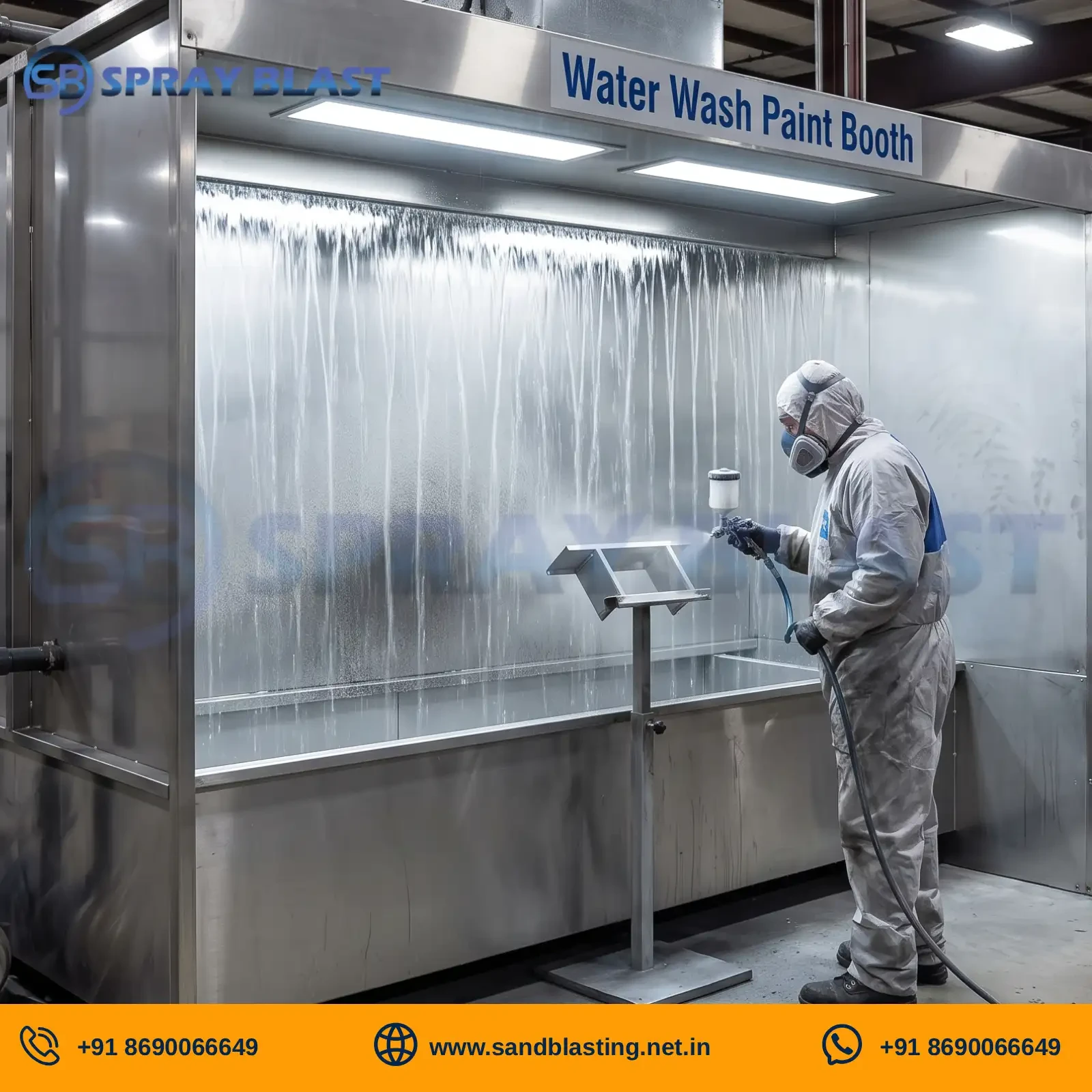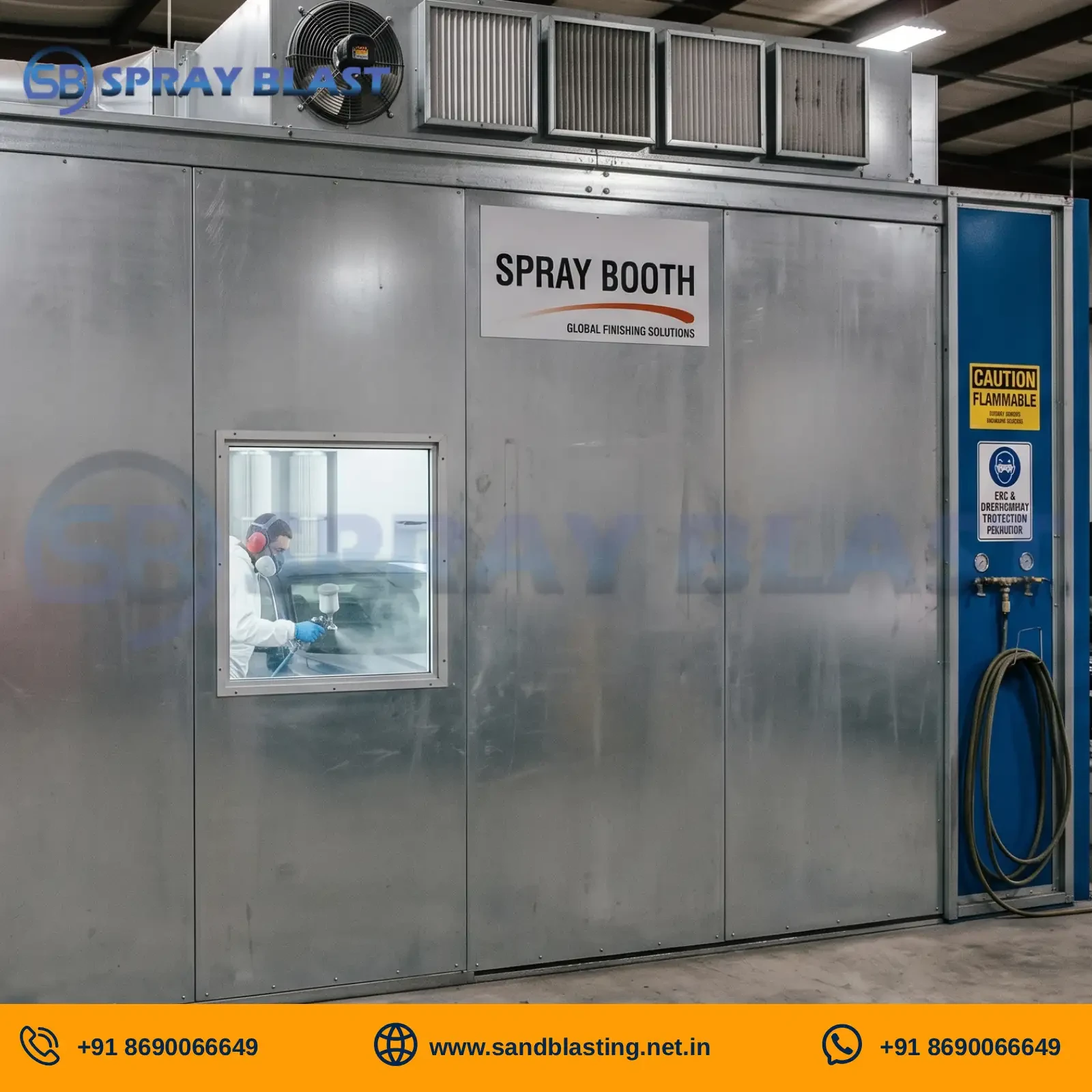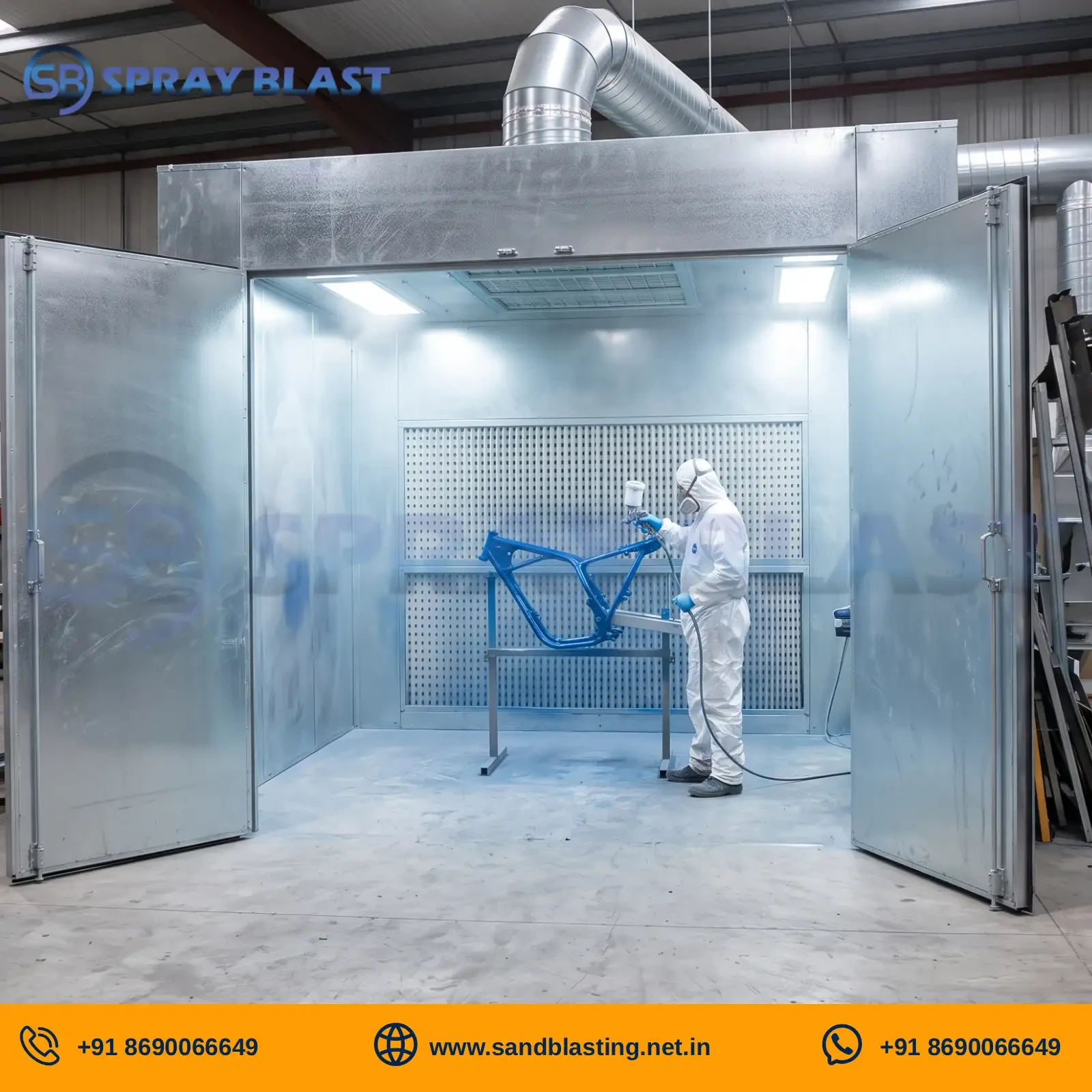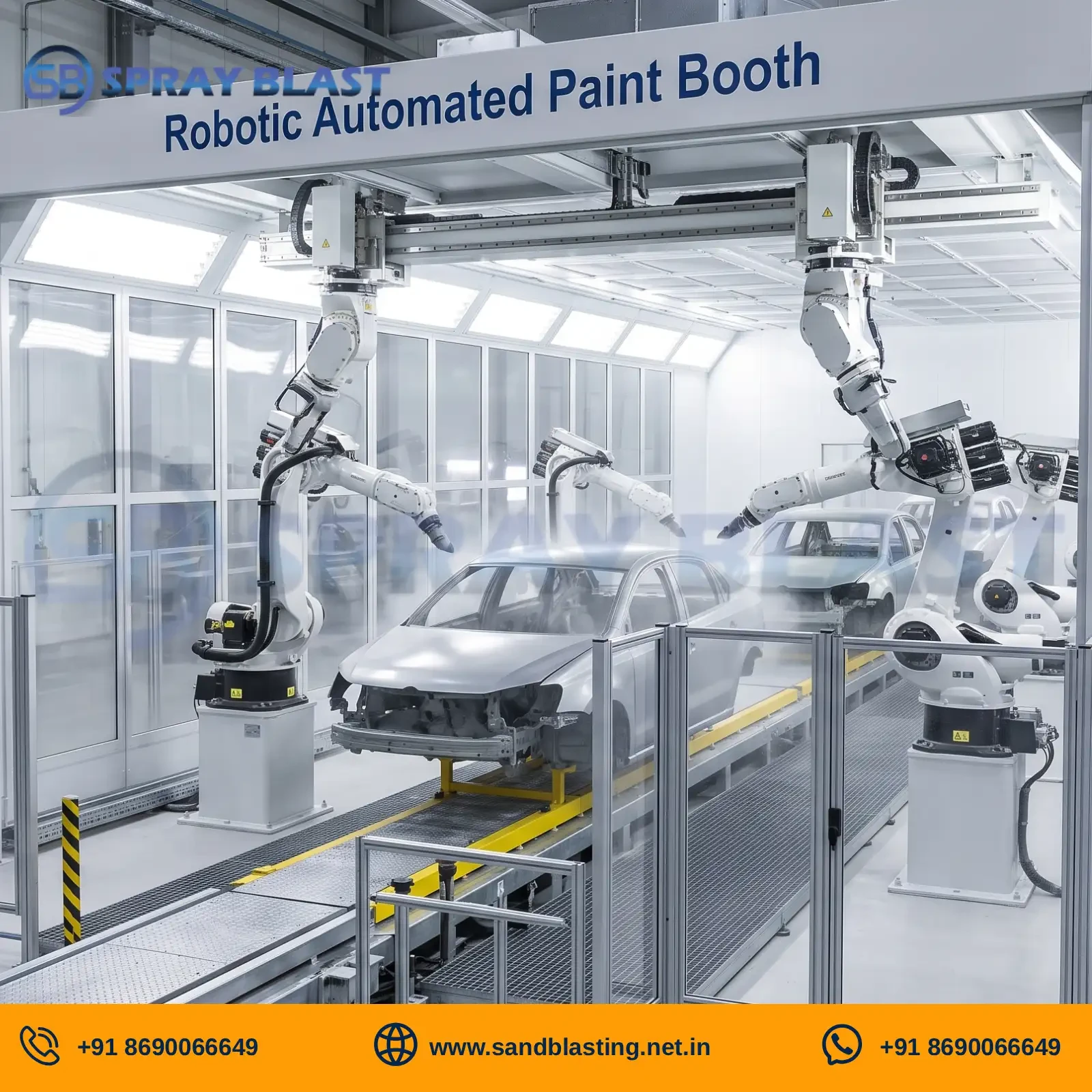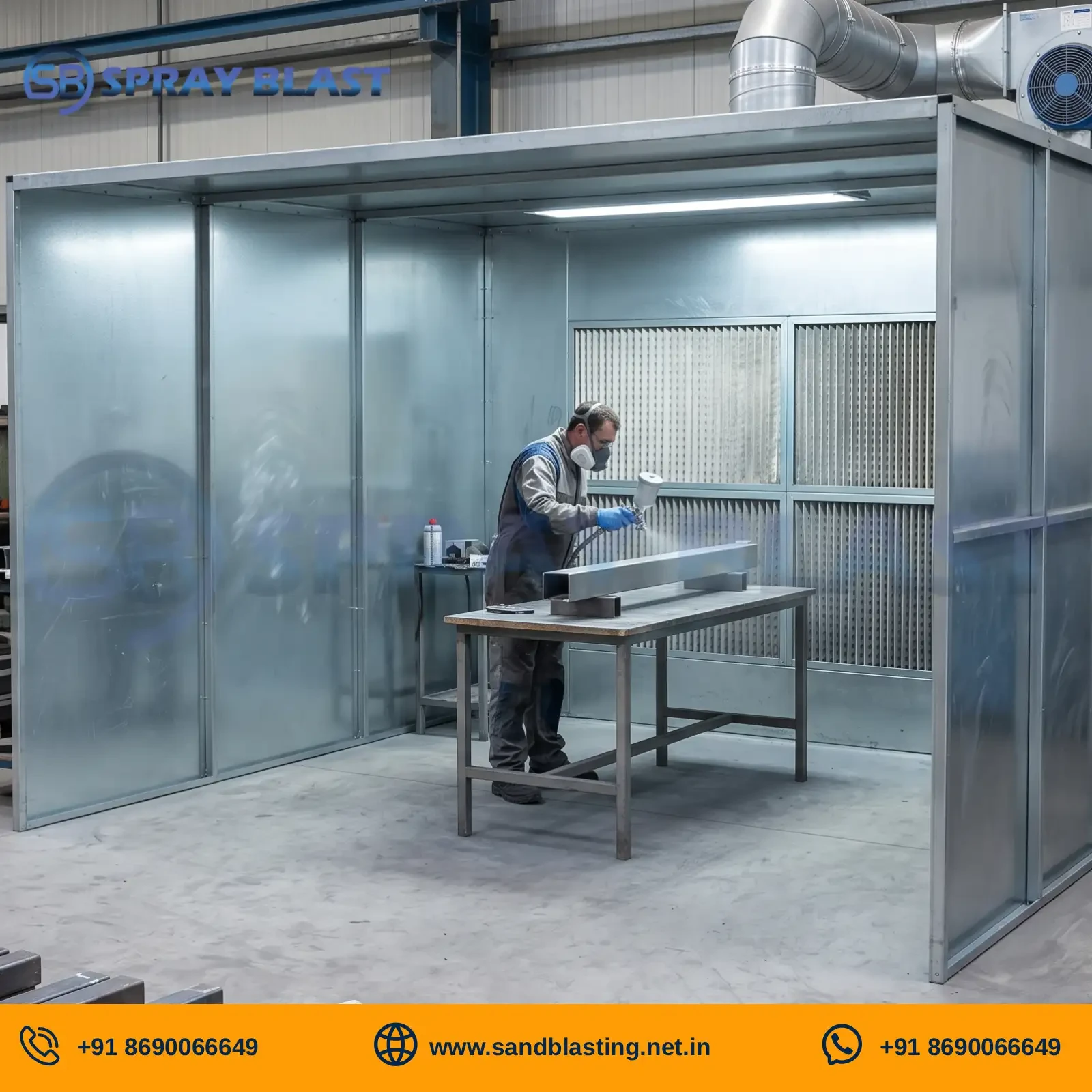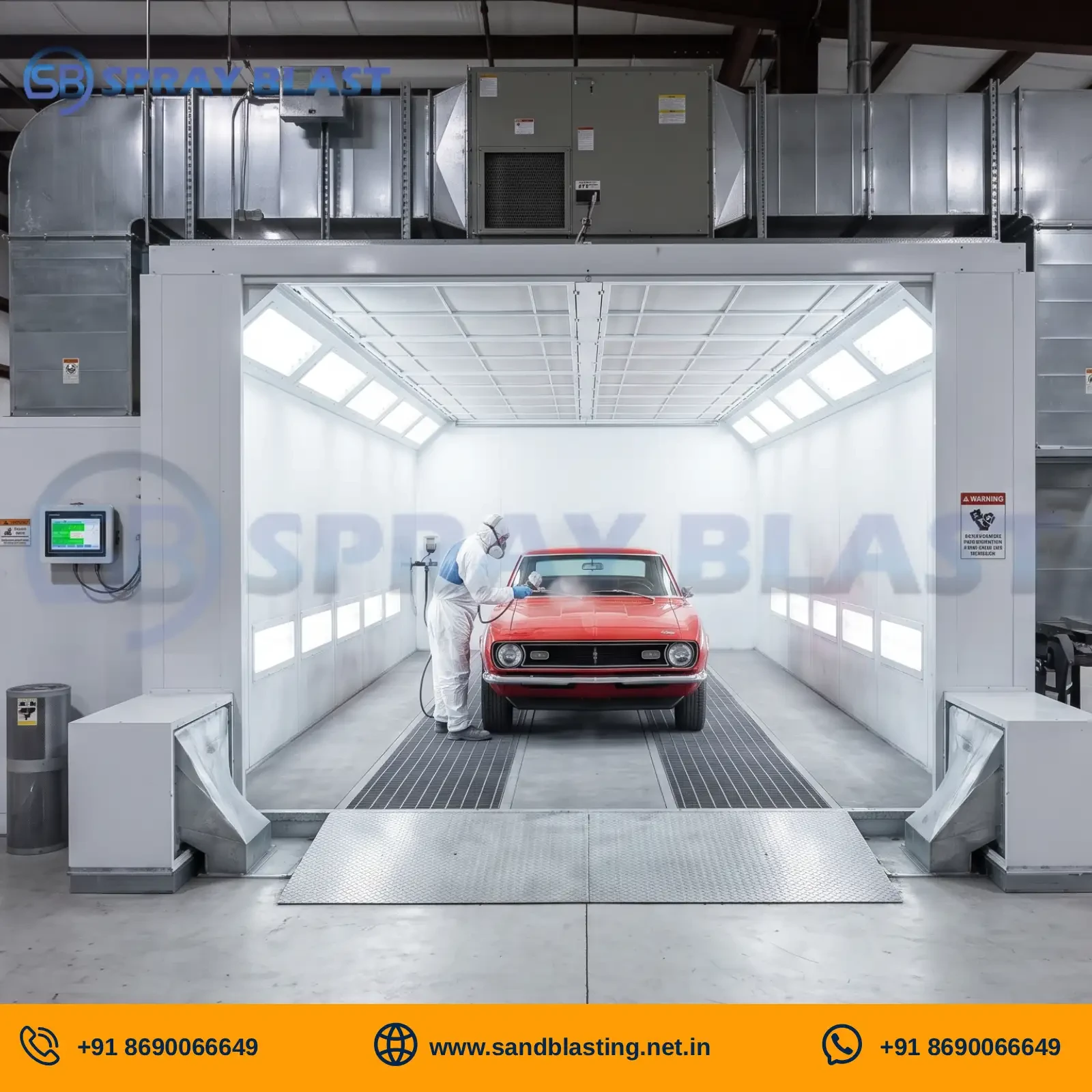
Spray Painting
Heated Paint Booth Bake Oven Booth provides a contained zone for primer and finish coats.
EnquirePaint Booth
Explore high-performance heated paint booths for industrial finishing. Our bake oven booths accelerate curing times, improve finish quality, and boost throughput. Request a quote.

Review the key product specifications used for quotation and application planning.
Explore high-performance heated paint booths for industrial finishing. Our bake oven booths accelerate curing times, improve finish quality, and boost throughput. Request a quote.
The job enters Heated Paint Booth Bake Oven Booth for spray in a controlled enclosure.
Paint is applied with the booth in spray mode and exhaust on.
Doors and dampers change over so heat can cure the film.
The oven cycle brings the cabin to the specified bake temperature.
Time-at-temperature is held, then the booth cools to a safe unload point.
The finish is checked for hardness, gloss, and defects before release.
A heated paint booth is a high-end finishing tool designed to help you have a great time while painting, from perfect application to fast, high-temperature curing. Compared to the regular spray booths, our combined bake oven booth provides the spraying area free of any contamination and the baking cycle together. In order to speed up production throughput, this dual work will enable you to have an excellent, factory-quality finish just in time. Our work meticulously controls temperature as well as airflow and thus produces consistent and repeatable results, totally free from defects and reworks, which is one way of increasing the efficiency of operations and higher product quality.
Getting a durable heated paint booth can be a good move for any industrial finishing business that is performance-oriented and wishes value for money permanently. Not only is heavy-gauge, galvanized steel used for construction, but also industrial-grade heating units and control systems have been integrated into our booths that can withstand wear and tear caused by continuous, round-the-clock operation, even with minimum maintenance. However, the benefit is more than just robustness; this thermal cure booth is able to adjust the energy during the bake cycle most efficiently and at the same time greatly minimizes the drying times, thereby cutting down production bottlenecks and labor costs. This will bring about a faster time-to-market for your finished products, a significant reduction in operational expenses, and an accelerated return on investment through increased capacity and top-notch quality.
Our industrial paint booths are engineered for performance, reliability, and regulatory compliance. The following specifications outline the available standard configurations. Custom sizes and features can be engineered to suit a particular operation.
| Specification | Details |
|---|---|
| Model Series | HPB-Series (Heated Paint Booth) / BOB-Series (Bake Oven Booth) |
| Booth Type | Downdraft / Semi-Downdraft / Crossdraft Airflow Configurations |
| Operating Temperature | Spray Mode: Ambient |
| Heating System | Direct-Fired or Indirect-Fired Gas Burner (Natural Gas/Propane) / Electric Infrared Emitters |
| Heat-Up Time | Approx. 15-25 minutes from ambient to 140°F (60°C), model dependent |
| Airflow Volume | 12,000 - 30,000+ CFM (Cubic Feet per Minute), scalable per booth size |
| Cabin Construction | 18-gauge, dual-panel, pre-coated Mild steel |
| Insulation | 4" high-density rockwool insulation for superior thermal efficiency and acoustic dampening |
| Internal Dimensions (W x H x D) | Standard models from 14' x 9' x 24' up to 20' x 16' x 60'. Custom sizes available. |
| External Dimensions (W x H x D) | Varies based on internal dimensions and equipment configuration. Schematics provided on request. |
| Main Door Configuration | Bi-fold or tri-fold filtered product doors with observation windows |
| Personnel Doors | (1) 36" x 84" safety door with observation window and panic latch |
| Control Panel | PLC-based digital control panel with VFDs for motor control, temperature regulation, cycle timers, and safety interlocks. |
| Lighting System | Class I, Division 2 high-efficiency LED light fixtures (inside-access) for optimal visibility. |
| Filtration System | Intake: Pre-filter and ceiling diffusion media. Exhaust: Multi-stage paint arrestor filters. |
| Power Supply | 208V/230V/460V/575V, 3-Phase, 60Hz. International voltages available. |
| Coating Compatibility | Solvent-based and waterborne paints, primers, clear coats, and industrial coatings. |
| Country of Origin | India |
A heated paint booth, sometimes referred to as a bake oven booth, is a highly advanced piece of equipment that is capable of both applying the paint and allowing it to dry. These two separate activities are carefully combined to not only give a perfect, spotless finish but also greatly increase the production capacity. This fully mechanized operation can be divided into four main processes:
The excellence in performance and dependability of our heated paint booth equipment can be traced back to the use of top-grade and industrial-grade parts. Each of our parts has been carefully crafted to function in unison, ensuring a conducive environment for seamless application and fast curing.
| Component Name | Description | Function | Material | Dimensions (Typical) | Weight (Approx.) |
|---|---|---|---|---|---|
| Cabin Enclosure | Insulated, dual-skin wall and ceiling panels form the main structure of the heated paint booth. | Creates a sealed, contaminant-free environment for spraying and high-temperature curing. Insulation minimizes heat loss for energy-efficient bake cycles. | 18-gauge Mild steel panels with high-density rockwool insulation core. | Varies by model (e.g., 26' L x 14' W x 9' H internal). Panel thickness: 2"- 4". | 4,500 - 8,000 kg |
| Air Makeup Unit (AMU) | An integrated direct-fired or indirect-fired gas/oil heating and ventilation system. The core of the bake oven booth functionality. | Heats fresh, filtered intake air to precise temperatures for both spray (approx. 70°F / 21°C) and bake/cure cycles (up to 180°F / 82°C). | Stainless steel heat exchanger, aluminized steel casing, high-efficiency burner. | 2m x 1.5m x 1.5m (Varies by CFM rating). | 700 - 1,500 kg |
| PLC Control Panel | Centralized, UL-listed digital interface for managing all booth operations, including temperature, cycle times, and airflow. | Allows operator to switch between spray, flash-off, and cure modes; set and monitor temperature; control lighting; and view system diagnostics. | NEMA-rated steel enclosure with industrial-grade switches, VFDs, and touchscreen display. | 600mm x 800mm x 250mm. | 45 kg |
| Intake & Exhaust Blowers | High-volume, axial flow fan or backward-inclined centrifugal fans engineered for industrial finishing environments. | Intake fan pushes filtered air into the cabin; exhaust fan removes overspray and VOCs, creating precise downdraft or crossdraft airflow. | Spark-resistant cast aluminum or fabricated steel blades, TEFC (Totally Enclosed, Fan-Cooled) motors. | Varies by CFM (e.g., 30" diameter fan). | 150 - 300 kg per unit |
| Multi-Stage Filtration | A comprehensive set of filters for both incoming air (pre-filter, ceiling diffusion media) and outgoing exhaust (paint stop, activated carbon). | Intake prefilter removes dust to ensure a Class A finish. Exhaust filters capture overspray and VOCs to meet EPA/OSHA regulations. | Synthetic fiber media, fiberglass, and activated carbon panels. | Standard panel sizes (e.g., 20"x20"x2"), ceiling media rolls. | Negligible (consumable). |
| High-Efficiency Lighting | Class I, Division 2 explosion-proof LED or fluorescent light fixtures, mounted in the ceiling and/or walls. | Provides bright, color-corrected, shadow-free illumination (>100 foot-candles) for accurate color matching and quality control. | Powder-coated steel housing, tempered glass lens, high-lumen LED strips. | 4-foot, 4-tube fixtures (standard). | 15 kg per fixture |
| Main & Personnel Doors | Heavy-duty, insulated bi-fold or tri-fold doors for product entry, and a separate personnel door with an observation window. | Provides easy access for large components while maintaining a tight seal to prevent heat loss. The personnel door allows safe entry/exit. | 18-gauge mild steel, insulated core, heavy-duty hinges, EPDM rubber seals. | Main: 12' W x 9' H; Personnel: 3' W x 7' H. | Main: 400 kg; Personnel: 70 kg |
Our heated paint booths are not just equipment; they are a key element of a high-performance finishing system within many of the most critical industries. Our booths are designed for use within facilities where finish quality, production speed, and safety are of the utmost concern. Our booths are a solution to a critical problem within many production environments. They are designed to be a strategic asset within your operation.
Buying a capital asset like a heated paint booth is mainly a Total Cost of Ownership (TCO) and production efficiency decision. We create our units to help you get your money back quickly by:
When it comes to the industrial finishing industry, safety standards and environmental issues must be considered carefully. Besides that, heated paint booth and bake oven booth configurations have been planned to comply with or surpass the following stringent requirements:
Downtime could even spell disaster in a high-volume production line. So, we have embedded the reliability of our heating-assisted spray booth into every single part to make sure that you experience maximum uptime and consistent performance:
The capacity to control the curing environment with precision is essential for attaining desirable properties in a coating system. Our curing paint booth systems are relied on by industry leaders in the following industries:
Investing in a capital item such as a high-performance heated paint booth is a strategic procurement activity. To ensure that you procure a paint booth that meets your production objectives and budget, we recommend that you focus on the following strategic areas:
Define Your Curing Profile and Substrate: You should clearly state your thermal needs before you ask for a quote. Get hold of the paint and coating systems you currently use, their temperature and timing requirements during curing stages. Let your equipment supplier know what types of substrates (steel, aluminum, composites, wood) and the maximum size and weight of parts. Detailed information will allow the supplier to make a perfect bake oven booth for your application.
Verify Supplier Certifications and Compliance: For safety and insurance reasons, check that this manufacturer passes all the necessary industry standards tests. Ask for their compliance certificates for NFPA 33, OSHA, and IFC. Going for electrical suppliers,s make sure their equipment and controls are UL or ETL listed. The CE marking is a must for European markets. A supplier having a strong compliance record is a big procurement trust signal.
Analyze Total Cost of Ownership (TCO): Don't just focus on the buying price. Ask for the power consumption for the heating system (BTU/hr or kW), the heat exchanger efficiency, and the average warranty period of filters and burner parts. More energy-efficient heated paint booths with robust components have lower TCO and faster ROI.
Inquire About Customization and Integration: You might find that standard models cannot really fit your factory layout or work process. Ask your potential suppliers if they can do custom dimensions and door configurations, and if they can integrate your conveyor system or production line. A company that can adjust to suit your needs is very valuable.
Clarify Minimum Order Quantities (MOQ) and Bulk Supply: As a rule, a Minimum Order Quantity of one (1) unit applies to standard and custom heated paint booths. A facility-wide upgrade or distributor interested in inquiring about framework agreements and potential tiered pricing of bulk supply.
Confirm Export Capabilities and Logistics: If you are importing goods from overseas, make sure you go with the exporters who are familiar with international trade. For example, they know export-compliant crating (ISPM 15), international freight logistics (FOB, CIF), and can provide all necessary customs documents, including Certificates of Origin and detailed commercial invoices.
Evaluate After-Sales Support and Warranty: Delivery is not the end of your cooperation with the supplier. Look very closely at the warranty clauses for the booth structure, heating system, control panel, etc. Make sure that technical support, installation supervision, and operator training are available, and the supply chain for critical spare parts is reliable, as these are factors that minimize your downtime.
Making the correct choice when it comes to the finishing system is a critical capital investment for any operation. A heated paint booth provides a number of advantages when it comes to the quality of the finish and the time it takes. However, it is necessary to make a comparison with the other common finishing systems used in the industry so that the value proposition of a heated paint booth is clearly understood in the context of the specific needs of the operation.
| Feature | Heated Paint Booth (Bake Oven Booth) | Standard Non-Heated Spray Booth | Infrared (IR) Curing System | Air Drying / Ambient Cure |
|---|---|---|---|---|
| Price | Higher initial investment (CapEx). Lower long-term operational cost through increased throughput. | Lower initial investment. Higher potential cost due to slower production and rework. | Variable cost; can be a low-cost portable unit or a high-cost integrated arch system. | No equipment cost. High cost in terms of floor space utilization and potential for defects. |
| Durability | System: High. Built for demanding industrial cycles. Finish: Superior. Thermal curing creates a harder, more durable, and chemically resistant finish. |
System: High. Structurally similar to heated booths. Finish: Variable. Dependent on paint chemistry and ambient conditions, often less durable. |
System: Good. IR lamps are consumables with a defined lifespan requiring replacement. Finish: Excellent for targeted areas, but can be inconsistent on complex shapes. |
System: N/A. Finish: Lowest durability. Highly susceptible to environmental contamination and inconsistent curing, leading to premature failure. |
| Features | Integrated spray and bake cycles, precise digital temperature and time control, advanced airflow management, and multi-stage filtration. | Contamination control, proper ventilation, and lighting for the spray application phase only. Lacks any curing technology. | Targeted, directional heat. Cures from the substrate outward. Can be portable for spot repairs or fixed for production lines. | Relies entirely on ambient temperature and humidity. No controllable features. |
| Performance | Speed: Very fast. Drastically reduces curing time from days/hours to minutes. Quality: Highest consistency and quality. Flawless, hard-cured finish. Throughput: Maximized. |
Speed: Slow. Curing is dependent on paint flash-off and ambient conditions. Quality: Inconsistent. Vulnerable to changes in temperature and humidity. Throughput: Low. |
Speed: Extremely fast for line-of-sight surfaces. Quality: High for flat panels, but can struggle with complex geometries, leading to uneven curing. Throughput: High for specific applications (e.g., auto body repair). |
Speed: Extremely slow and unpredictable. Quality: Lowest quality. High risk of defects like dust nibs, solvent pop, and runs. Throughput: Very low. |
| Target Users | High-volume manufacturing, automotive OEM & refinish, aerospace, and industrial finishers requiring premium quality, repeatability, and maximum throughput. | Low-to-medium volume shops, woodworking, or operations where long cure times are acceptable and not a production bottleneck. | Automotive body shops for spot/panel repairs, specialized industrial processes where rapid, targeted heating is beneficial. | Hobbyists, DIY applications, or very low-volume operations where speed, quality, and consistency are not critical business drivers. |
Compare Heated Paint Booth Bake Oven Booth with other models in Paint Booth.
| Specification | Water Wash Paint Booth | This model Heated Paint Booth Bake Oven Booth | Enclosed Paint Booth |
|---|---|---|---|
| Airflow Capacity | 8,000 - 12,000 CFM | — | — |
| External Dimensions (W x H x D) | 10' x 8' x 8' | Varies based on internal dimensions and equipment configuration. Schematics provided on request. | — |
| Internal Working Area (W x H x D) | 9'6" x 7'8" x 6' | — | — |
| Construction Material | 18-Gauge Mild Steel | — | 18-gauge, pre-punched, single-skin mild steel panels; white powder-coated finish (interior/exterior) |
| Water Tank Capacity | 200 Gallons (757 Liters) | — | — |
| Water Pump Motor | 2 HP TEFC Motor | — | — |
| Exhaust Fan Motor | 5 HP Tubeaxial Fan | — | — |
| Filtration Efficiency | >99% particulate overspray capture | — | — |
| Lighting | 4 x T8 LED Fixtures (Class I, Div 2) | — | Class 1, Division 2 explosion-proof LED light fixtures; 100-150 ft-candles illumination |
| Paint Compatibility | Solvent-based, Water-based, Primers, Enamels, Urethanes, Epoxies | — | — |
| Application System Compatibility | HVLP, Airless, Air-Assisted Airless, Electrostatic, Robotic Applicators | — | — |
| Control Panel | NEMA 12 Control Panel with motor starters, light switches, and airflow monitoring | PLC-based digital control panel with VFDs for motor control, temperature regulation, cycle timers, and safety interlocks. | UL/ETL listed industrial control panel with motor starters, airflow control, and digital temperature display |
| Compliance Standards | Designed to meet or exceed NFPA 33, OSHA 1910, and IFC standards | — | — |
| Country of Origin | Manufactured in India | India | Manufactured in the USA with globally sourced components |
| Brand | Spray Blast | Spray Blast | Spray Blast |
| Country | India | India | India |
| Packaging | Customized | Customized | Customized |
| Transport | Local Transport | Local Transport | Local Transport |
| Price Range | Rs 8 Lakh - 10 Cr. | Rs 8 Lakh - 10 Cr. | Rs 8 Lakh - 10 Cr. |
| Model Series | — | HPB-Series (Heated Paint Booth) / BOB-Series (Bake Oven Booth) | EPB-2000 (Standard), EPB-3000 (Pressurized), EPB-4000 (Climate-Controlled) |
| Booth Type | — | Downdraft / Semi-Downdraft / Crossdraft Airflow Configurations | — |
| Operating Temperature | — | Spray Mode: Ambient | — |
| Heating System | — | Direct-Fired or Indirect-Fired Gas Burner (Natural Gas/Propane) / Electric Infrared Emitters | — |
| Heat-Up Time | — | Approx. 15-25 minutes from ambient to 140°F (60°C), model dependent | — |
| Airflow Volume | — | 12,000 - 30,000+ CFM (Cubic Feet per Minute), scalable per booth size | — |
| Cabin Construction | — | 18-gauge, dual-panel, pre-coated mild steel | — |
| Insulation | — | 4" high-density rockwool insulation for superior thermal efficiency and acoustic dampening | — |
| Internal Dimensions (W x H x D) | — | Standard models from 14' x 9' x 24' up to 20' x 16' x 60'. Custom sizes available. | — |
| Main Door Configuration | — | Bi-fold or tri-fold filtered product doors with observation windows | — |
| Personnel Doors | — | (1) 36" x 84" safety door with observation window and panic latch | — |
| Lighting System | — | Class I, Division 2 high-efficiency LED light fixtures (inside-access) for optimal visibility | — |
| Filtration System | — | Intake: Pre-filter and ceiling diffusion media. Exhaust: Multi-stage paint arrestor filters. | 3-Stage: Pre-filter (G3), Ceiling Intake Filter (F5), Exhaust Filter (Fiberglass Paint Arrestor) |
| Power Supply | — | 208V/230V/460V/575V, 3-Phase, 60Hz. International voltages available. | — |
| Coating Compatibility | — | Solvent-based and waterborne paints, primers, clear coats, and industrial coatings. | — |
| External Dimensions (L x W x H) | — | — | Standard sizes range from 24' x 14' x 9' to 40' x 16' x 12'; custom sizes available |
| Internal Working Dimensions (L x W x H) | — | — | Standard sizes range from 23'6" x 13'6" x 8'6" to 39'6" x 15'6" x 11'6" |
| Airflow System | — | — | Downdraft, Semi-Downdraft, or Crossdraft configurations; 12,000 - 28,000 CFM (Cubic Feet per Minute) |
| Power Requirements | — | — | 208V/230V/460V, 3-Phase, 60Hz; specific requirements vary by model and options |
| Heating & Curing System | — | — | Optional: Direct-fired natural gas or propane air makeup unit (AMU) for pressurized and climate-controlled models |
| Personnel & Vehicle Doors | — | — | Tri-fold main doors with observation windows; one personnel door with observation window and panic latch |
| Compliance | — | — | Designed to meet or exceed NFPA 33, OSHA, and IFC standards |
| Compatibility | — | — | Suitable for solvent-based and waterborne coatings, primers, and clear coats |
Typical applications for Heated Paint Booth Bake Oven Booth across industrial blasting, coating, and surface preparation work.
Heated Paint Booth Bake Oven Booth provides a contained zone for primer and finish coats.
EnquireFilters or a water curtain capture paint solids from the airstream.
EnquireFabrications, vehicles, or components are coated under controlled lighting.
EnquireCoated work flashes or bakes according to the booth setup.
EnquireFirst coats are sprayed with stable airflow and clean filters.
EnquireOld equipment is refinished inside a contained spray envelope.
EnquireBooth lighting supports consistent color checks during spray.
EnquireEnclosed airflow helps meet site rules for solvent coatings.
EnquireAnswer a few questions and we will suggest a starting configuration for Heated Paint Booth Bake Oven Booth — then confirm the exact specification with our team.
What will you paint or coat?
Coating process?
Preferred airflow style?
Heating requirement?
Installation type?
Clear answers on specification, usage, and what to expect before you request a quote.
Tell us the application, quantity, and delivery need for Heated Paint Booth Bake Oven Booth.
Tell us the product, application, quantity, or repeat supply requirement for steel shot, steel grit, garnet abrasive, glass beads, or related blasting media.