Spray Painting
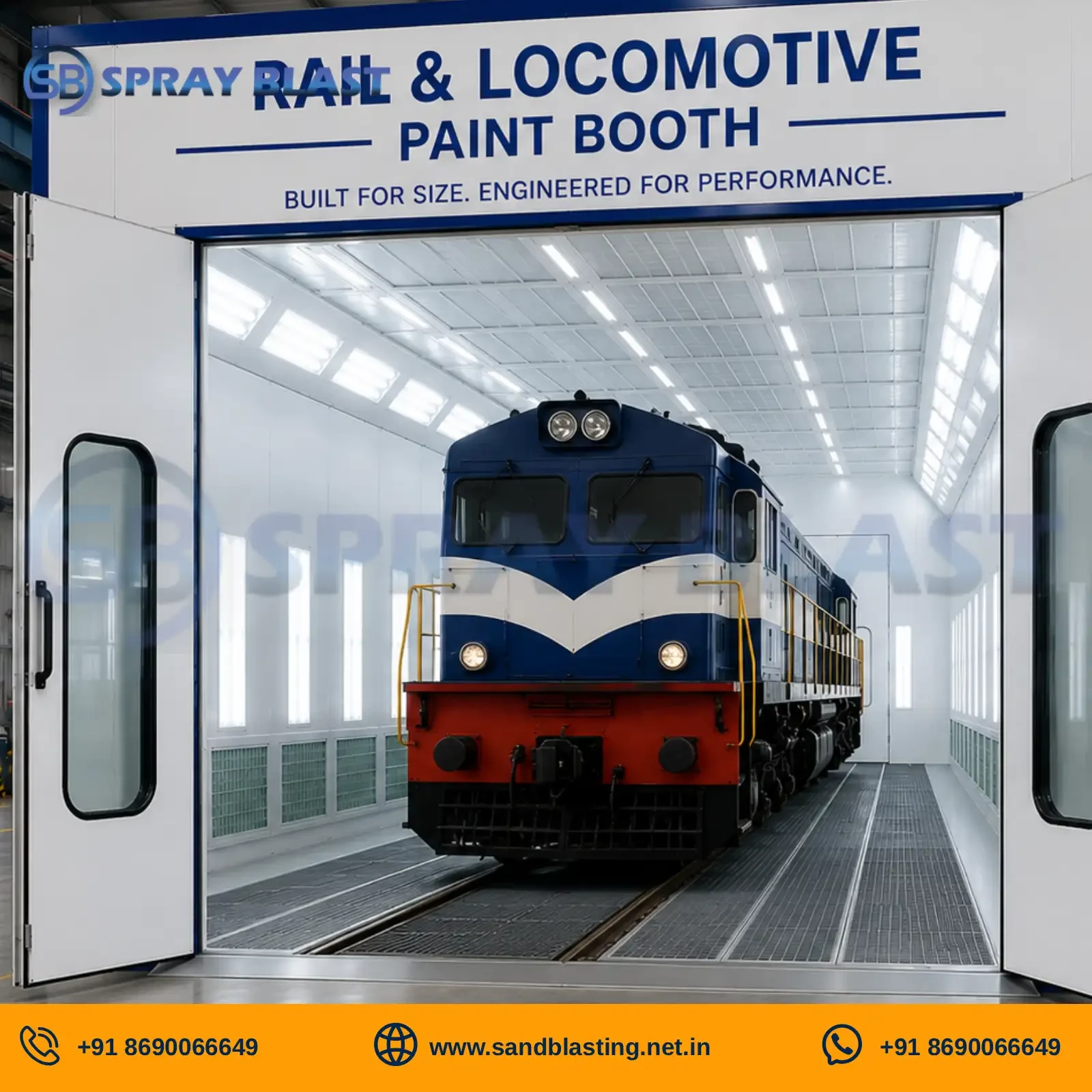
Rail And Locomotive Paint Booth provides a contained zone for primer and finish coats.
EnquirePaint Booth
Discover high-performance rail & locomotive paint booths engineered for superior finishing on large transit vehicles. Our custom locomotive spray booths ensure compliance, efficiency, and a flawless coating. Request a quote for your railway coating booth today.
Review the key product specifications used for quotation and application planning.
Discover high-performance rail & locomotive paint booths engineered for superior finishing on large transit vehicles. Our custom locomotive spray booths ensure compliance, efficiency, and a flawless coating. Request a quote for your railway coating booth today.
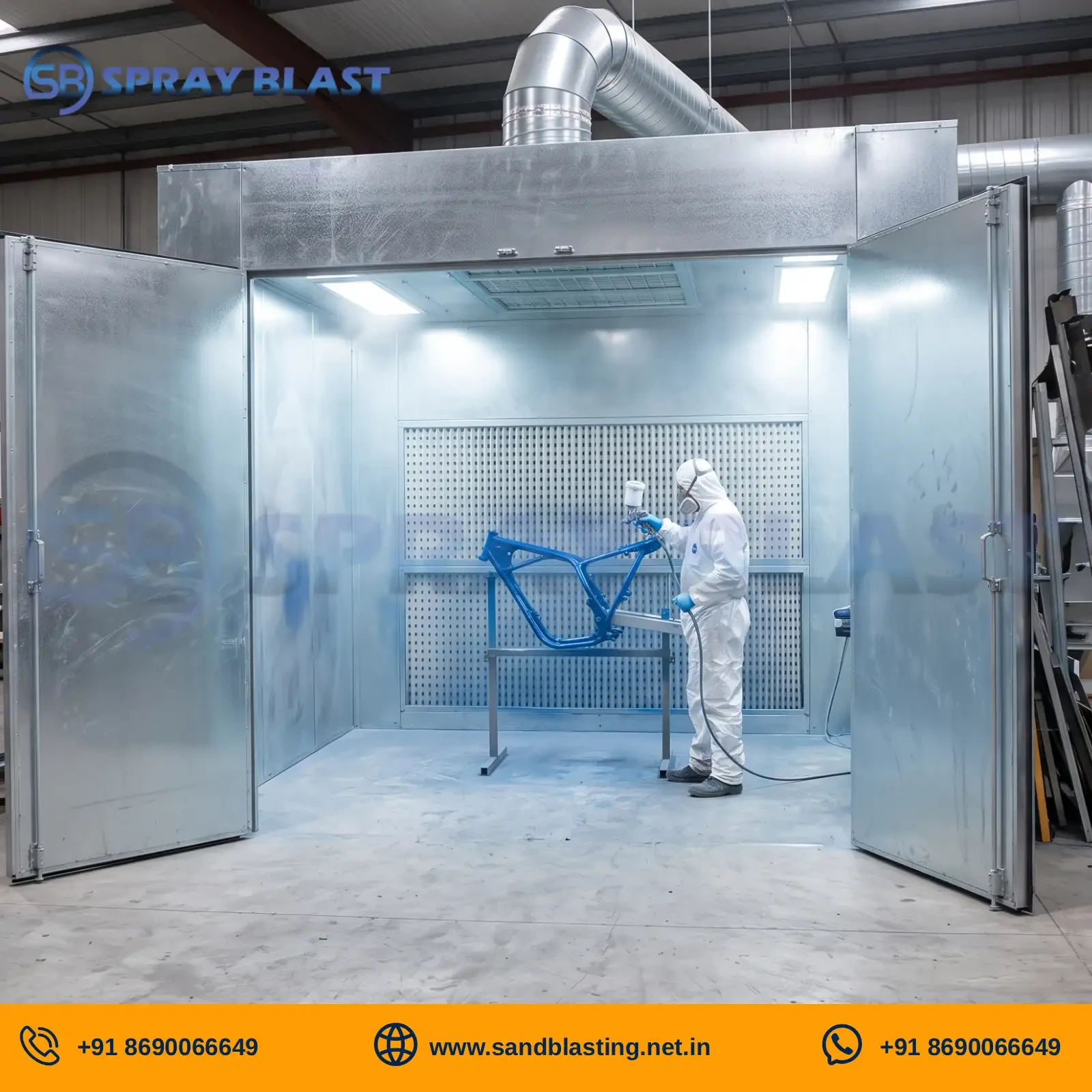
The workpiece or vehicle is positioned inside Rail And Locomotive Paint Booth with doors and lighting ready.
Intake and exhaust fans set the designed spray velocity around the work.
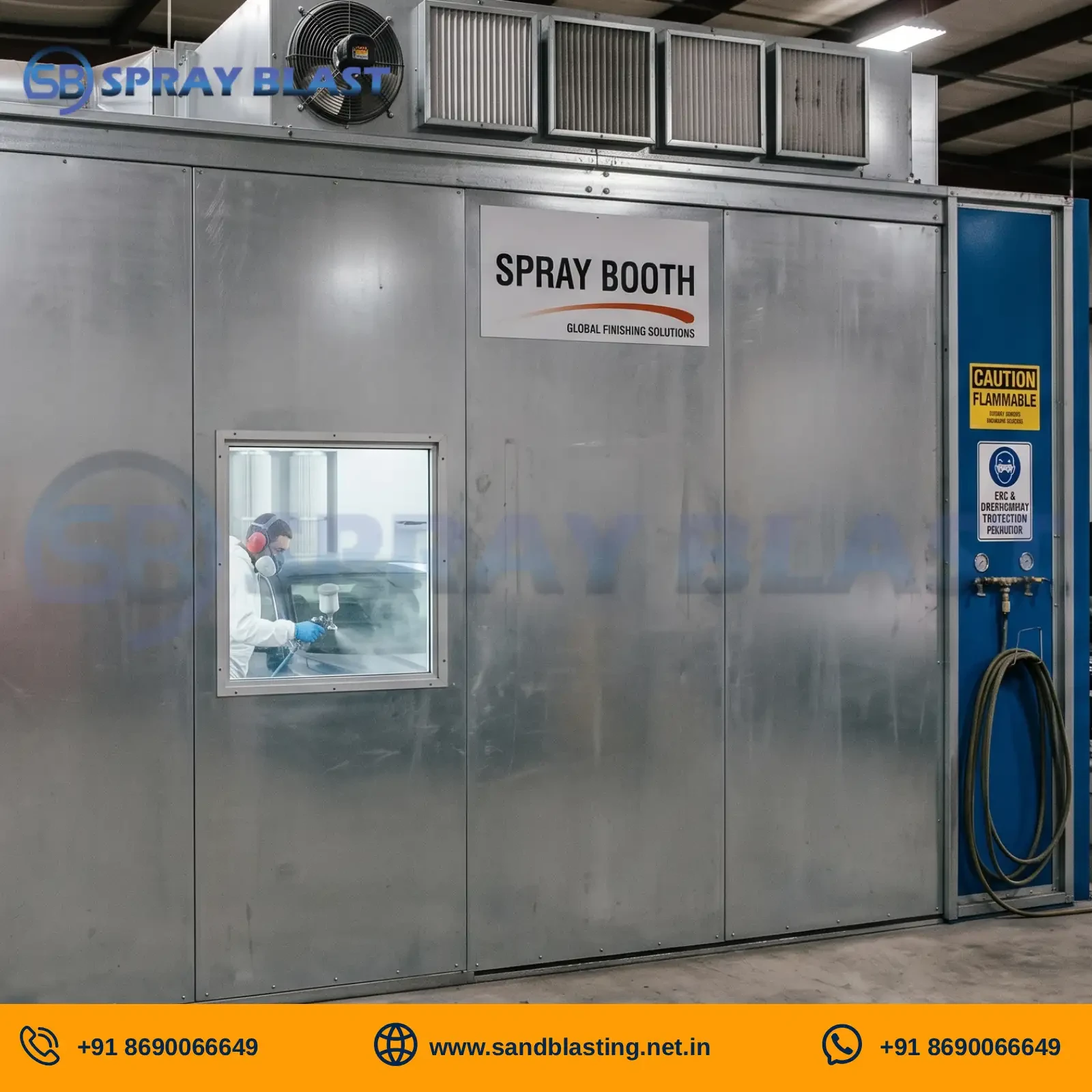
Operators spray primer or finish while overspray is pulled toward filtration.
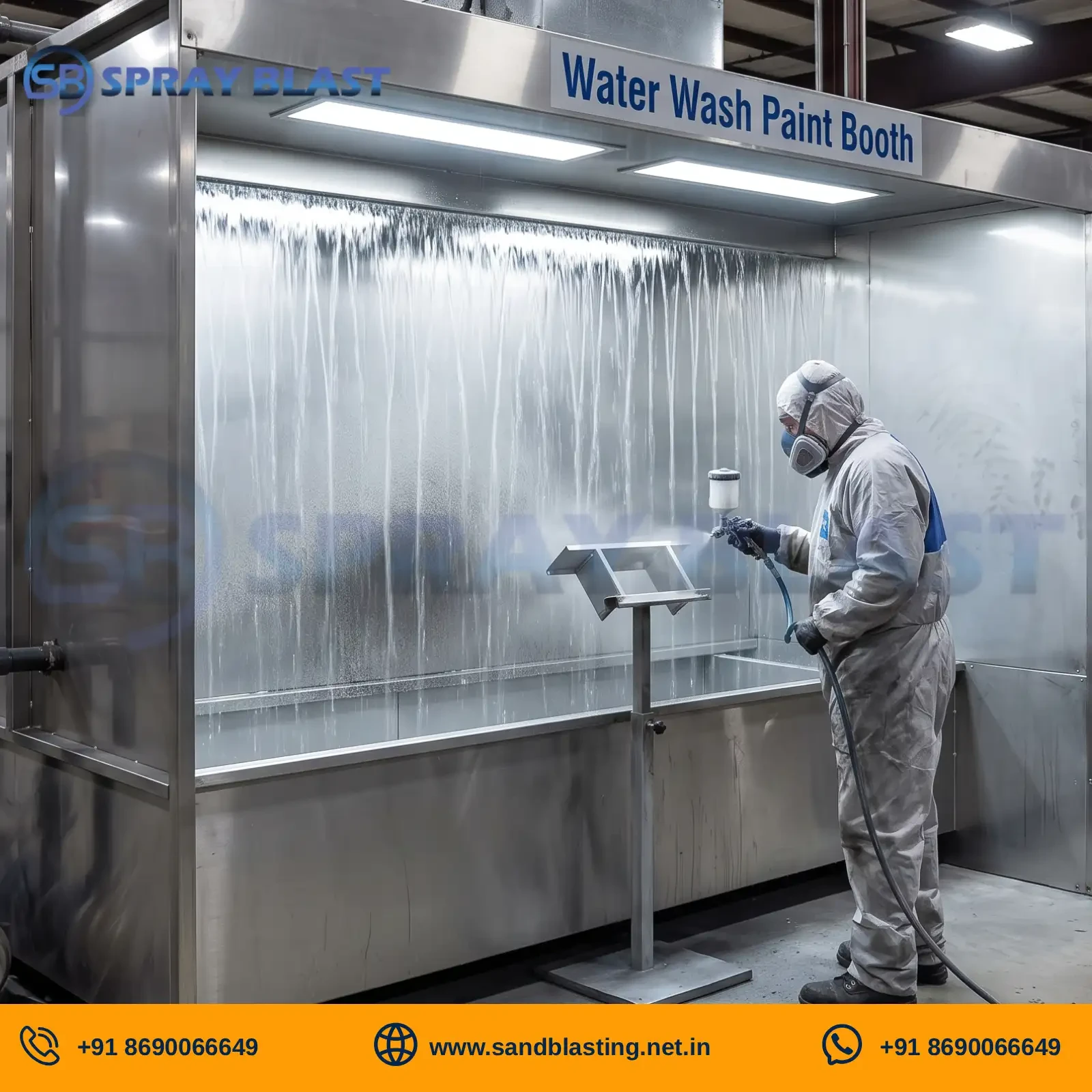
Filters or a water curtain remove paint solids from the airstream.
The coating flashes or bakes according to the booth configuration.
Finished work leaves the booth and the enclosure is prepared for the next job.
Designed for the railroad industry's huge scale and intense working conditions, a specialized rail & locomotive paint booth offers a tightly regulated atmosphere for the application and hardening of high-grade paint. These gigantic buildings do not merely serve as covers; rather, they are tailor-made finishing units made with heavy-gauge, reinforced steel and top-quality industrial parts meant to endure decades of very heavy work. Our paint booths can hold not only single railcars or transit vehicles but also locomotives in their entirety, making sure that the greatest level of toughness and dependable operation is reached. Such a solid building provides a lengthy working life, keeps your financial investment safe, and, at the same time, presents a safe, hygienic, and properly constructed work environment for your most important coating tasks.
The main advantage of a good-quality rail & locomotive paint booth is that it can produce perfect, factory-level finishes very efficiently. Our systems, which combine intelligent climate control, multi-level filtration, and air movement optimization, set the stage for proper paint bonding and curing while significantly minimizing the chances of doing the work all over again or wasting materials. Thanks to this high level of environmental control, you can expect uniform finishing, your assets will be shielded from rust, and you will be able to satisfy the very strict AAR and environmental requirements. From a user point of view, such an upgrade will not only allow you to amp up the production, but also reduce the overall cost of the operation, improve the safety of workers, and deliver a top-notch product that supports your brand's image of top-quality and durability.
Our rail & locomotive paint booth systems are engineered for durability, compliance, and superior finishing performance. Each booth is custom-designed to accommodate the unique dimensions and process requirements of railcars, locomotives, and other large transit vehicles.
| Specification | Details |
|---|---|
| Model Series | RPB-Series (Customizable) |
| Product Name | Custom Rail & Locomotive Paint Booth |
| Primary Application | Surface preparation, priming, painting, and curing of railway rolling stock |
| Construction Material | Heavy-gauge, dual-panel insulated mild steel with white pre-coated powder finish |
| Internal Dimensions (L x W x H) | Fully customizable. Typical range: 25m - 50m L x 5m - 7m W x 6m - 8m H |
| External Dimensions (L x W x H) | Dependent on internal dimensions and ancillary equipment configuration |
| Door Configuration | Four-leaf bi-fold or heavy-duty roll-up doors; drive-through configurations available |
| Airflow System | Downdraft, Side-Downdraft, or Crossdraft configurations; Variable Frequency Drive (VFD) controlled |
| Airflow Volume | Engineered per booth size; typically 50,000 - 200,000+ CFM |
| Filtration System | Multi-stage: G3/G4 pre-filters, high-efficiency ceiling intake filters, NESHAP-compliant 3-stage exhaust filtration |
| Lighting System | Class I, Division 2 explosion-proof LED light fixtures; 100-150 foot-candles (1075-1615 Lux) at floor level |
| Control System | PLC-based control panel with HMI touchscreen for managing spray, cure, and flash-off cycles |
| Heating & Curing System | Direct or indirect-fired air makeup unit (AMU) with bake cycle capabilities up to 180°F (82°C) |
| Personnel & Equipment Access | Integrated personnel doors with observation windows; options for integrated scissor lifts or mobile work platforms |
| Vehicle Compatibility | Locomotives, passenger rail cars, freight cars, subway cars, light rail vehicles, and other transit vehicles |
| Coating Compatibility | Solvent-based and waterborne coatings, including high-solids polyurethanes, epoxies, and primers |
| Country of Origin | India |
A rail & locomotive paint booth is a specially designed environmental enclosure that helps to provide a controlled, safe, and contaminant-free space for the application and curing of industrial coatings on large-scale transit vehicles. The core concept is to precisely regulate the airflow, temperature, and filtration so that a perfect, durable finish is obtained, at the same time ensuring operator safety and environmental compliance.
Typically, a paint booth cycle can be broken down into several stages:
Each component of our rail & locomotive paint booth is designed with longevity, performance, and compliance in mind. Our modular design is easily customized to accommodate your unique operational footprint and finishing needs.
| Component Name | Description | Function | Material | Typical Dimensions (L x W x H) | Approx. Weight | Standard Color |
|---|---|---|---|---|---|---|
| Main Booth Enclosure | The primary structural framework and insulated paneling form the controlled finishing environment. | Contains overspray, controls airflow, and provides a clean, temperature-controlled environment for high-quality finishing on rail vehicles. | 18-gauge mild steel panels with 4" non-combustible rockwool insulation. | Customizable (e.g., 120' x 25' x 28') | 45,000 kg+ | White (Interior), Gray (Exterior) |
| Air Makeup Unit (AMU) | A high-capacity, direct-fired heating and filtration unit that supplies conditioned air to the booth. | Heats, filters, and pressurizes the booth cabin to create optimal spraying conditions and prevent contaminant ingress during the paint cycle. | Heavy-gauge aluminized steel housing, stainless steel burner components. | 15' x 8' x 10' | 3,500 kg | Gray |
| Exhaust Plenum & Fan System | A series of high-volume, tube-axial fans and ductwork is integrated into a filtered exhaust chamber. | Safely extracts solvent fumes and overspray, passing air through a multi-stage filtration system before exhausting to the atmosphere. | Non-sparking cast aluminum fan blades, galvanized steel ducting, and plenum structure. | Varies with booth size; 48" diameter fans are typical. | 1,800 kg (System) | Galvanized Steel |
| PLC Control Panel | A centralized, NEMA 12-rated programmable logic controller (PLC) with a user-friendly HMI touchscreen. | Manages all operations of the rail & locomotive paint booth, including spray/cure cycles, temperature, airflow, lighting, and safety interlocks. | Powder-coated steel enclosure with industrial-grade electronic components. | 36" x 48" x 12" | 150 kg | ANSI 61 Gray |
| High-Efficiency LED Lighting | Class I, Division 2 explosion-proof LED light fixtures, strategically placed for shadow-free illumination. | Provides bright, color-corrected (5000K) lighting essential for precise color matching and quality inspection during the finishing process. | Die-cast aluminum housing, tempered glass lens. | 48" x 12" x 4" (per fixture) | 12 kg (per fixture) | White / Aluminum |
| Quad-Fold Product Doors | Heavy-duty, four-leaf insulated doors designed to accommodate the full profile of locomotives and rail cars. | Provides a secure, airtight seal when closed and allows for easy entry and exit of large transit vehicles into the spray booth. | Insulated galvanized steel panels with a heavy-duty structural steel frame and industrial-grade hardware. | 22' W x 26' H (typical) | 2,500 kg | Gray |
| Integrated Personnel Lifts | Multi-axis, pneumatically or electrically powered man lifts that travel along the interior walls of the booth. | Allows painters and technicians to safely and efficiently access all areas of the locomotive, from the undercarriage to the roof. | Structural steel with non-slip platform, certified safety railings, and redundant locking systems. | Platform: 4' x 6'; Travel: Full length of booth. | 1,200 kg (per lift) | Safety Yellow |
| Multi-Stage Filtration System | A comprehensive set of filters for both intake and exhaust air streams, including pre-filters and NESHAP-compliant exhaust filters. | Ensures incoming air is free of contaminants and that exhaust air meets or exceeds environmental regulations by capturing over 99% of paint particulates. | Synthetic fiber media, high-capacity fiberglass. | Varies (panels and bulk rolls). | Varies by type. | Color-coded by stage. |
The process of purchasing a rail and locomotive paint booth represents a capital investment in operational efficiency and asset longevity. For fleet operators, MRO facilities, and OEMs, the process extends beyond the cost factor to the Total Cost of Ownership (TCO). Our industrial paint booths are designed to provide long service life with the use of heavy-gauge steel and industrial-grade components to minimize maintenance downtime and operating costs. A well-designed railway coating booth will provide a direct impact on the return on investment by providing a high-quality finish to extend the life of high-value assets such as locomotives, passenger cars, and freight cars, thereby protecting them against corrosion and environmental damage.
This industry has very stringent regulations in terms of safety and environmental compliance. Our locomotive spray booth system and automotive paint booth are designed from the ground up to meet or exceed critical compliance requirements such as the National Fire Protection Association 33, Occupational Health and Safety Administration, and the Environmental Protection Agency regulations for VOC abatement. With our locomotive spray booth systems, we provide a safe working environment for our technicians and help facility managers and EHS coordinators avoid costly fines and the permitting process.
Downtime is never acceptable in the transit industry. When a locomotive or a railcar is out of commission, every hour counts. Our rail and locomotive paint booth products are designed with the same high standards for reliability. Features such as redundant design, easy access to maintenance components such as filters and motors, and robust control panel designs to control the environment are just a few. Our engineering expertise ensures a smooth process to allow for maintenance schedules and the highest possible productivity in your finishing process. Whether it's a single locomotive or a fleet of passenger cars, our paint booths offer the reliability necessary for high-production processes.
The finishing coating applied to the rail vehicle is the final stage in the process and is considered the ultimate protective finish in terms of brand quality. It is important to note that the application of the perfect finish on such large and intricate surfaces requires absolute control of the environment. Our booths offer the perfect environment in terms of temperature control, humidity control, and airflow control, thus allowing the perfect conditions required for modern coatings to cure perfectly. The perfect conditions provided in the booths eliminate any defects such as overspray, dust particles, and adhesion problems, thus ensuring that the rail vehicles exiting the train painting booths meet the perfect requirements of the OEM or the rail operator.
Investing heavily in a rail and locomotive paint booth might be your decision. To get your desired technical functionalities, operations, and safety compliant at the same time, you can follow this procurement guide for buying a system.
Selecting the optimal finishing environment is a critical investment decision for any rail or transit operation. While alternatives exist, a purpose-built rail & locomotive paint booth is engineered specifically to address the unique challenges of scale, compliance, and quality inherent in the industry. The following table compares our specialized booths against common alternatives.
| Feature / Aspect | Specialized Rail & Locomotive Paint Booth | Standard Large Equipment Booths | Open-Air / Makeshift Enclosures |
|---|---|---|---|
| Price | High initial investment with a strong, long-term ROI due to operational efficiency, reduced rework, and energy savings. | Moderate to high initial cost, often with additional hidden costs for modification to accommodate railcars. | Very low initial cost, but extremely high long-term costs from material waste, contamination, rework, and potential compliance fines. |
| Durability | Extremely High. Constructed from heavy-gauge, reinforced structural steel designed to withstand the demands of massive locomotives and decades of industrial use. | Good to High. Built for industrial use but may lack the specific structural reinforcement needed for the unique stresses and scale of rail vehicles. | Very Low. Temporary structures (e.g., tarps) are prone to damage, offer no security, and are not a viable long-term industrial solution. |
| Features | Purpose-Built. Drive-through designs, integrated personnel lifts, zoned airflow and lighting, advanced multi-stage filtration, precise climate control, and full compliance packages (NFPA, OSHA). | Generic. Standard filtration and lighting. Lacks specialized features for railcar geometry, operator access, and high-volume throughput. | None. Lacks any engineered features for safety, quality control, airflow, filtration, or environmental compliance. |
| Performance | Superior. Delivers consistent, OEM-quality finishes with high transfer efficiency. Ensures rapid, uniform curing and maximizes operational throughput while guaranteeing environmental and safety compliance. | Inconsistent. Airflow may not be optimized for locomotive profiles, leading to variable finish quality. Slower cycle times and potential compliance challenges with large surface areas. | Poor. High risk of finish contamination from dust and debris. No control over temperature or humidity, leading to poor adhesion and curing. Creates significant safety and environmental hazards. |
| Target Users | Railcar OEMs, locomotive MRO facilities, public transit authorities, and freight line operators requiring high-volume, compliant, and top-quality finishing. | General heavy equipment manufacturers or repair facilities that do not specialize in rail and may only occasionally paint oversized vehicles. | Small, low-volume operations or facilities with severe budget limitations where quality, safety, and compliance are not primary concerns. |
Compare Rail And Locomotive Paint Booth with other models in Paint Booth.
| Specification | Water Wash Paint Booth | This model Rail And Locomotive Paint Booth | Enclosed Paint Booth |
|---|---|---|---|
| Airflow Capacity | 8,000 - 12,000 CFM | — | — |
| External Dimensions (W x H x D) | 10' x 8' x 8' | — | — |
| Internal Working Area (W x H x D) | 9'6" x 7'8" x 6' | — | — |
| Construction Material | 18-Gauge Mild Steel | Heavy-gauge, dual-panel insulated mild steel | 18-gauge, pre-punched, single-skin mild steel panels; white powder-coated finish (interior/exterior) |
| Water Tank Capacity | 200 Gallons (757 Liters) | — | — |
| Water Pump Motor | 2 HP TEFC Motor | — | — |
| Exhaust Fan Motor | 5 HP Tubeaxial Fan | — | — |
| Filtration Efficiency | >99% particulate overspray capture | — | — |
| Lighting | 4 x T8 LED Fixtures (Class I, Div 2) | — | Class 1, Division 2 explosion-proof LED light fixtures; 100-150 ft-candles illumination |
| Paint Compatibility | Solvent-based, Water-based, Primers, Enamels, Urethanes, Epoxies | — | — |
| Application System Compatibility | HVLP, Airless, Air-Assisted Airless, Electrostatic, Robotic Applicators | — | — |
| Control Panel | NEMA 12 Control Panel with motor starters, light switches, and airflow monitoring | — | UL/ETL listed industrial control panel with motor starters, airflow control, and digital temperature display |
| Compliance Standards | Designed to meet or exceed NFPA 33, OSHA 1910, and IFC standards | — | — |
| Country of Origin | Manufactured in India | India | Manufactured in the USA with globally sourced components |
| Brand | Spray Blast | Spray Blast | Spray Blast |
| Country | India | India | India |
| Packaging | Customized | Customized | Customized |
| Transport | Local Transport | Local Transport | Local Transport |
| Price Range | Rs 8 Lakh - 10 Cr. | Rs 8 Lakh - 10 Cr. | Rs 8 Lakh - 10 Cr. |
| Model Series | — | RPB-Series (Customizable) | EPB-2000 (Standard), EPB-3000 (Pressurized), EPB-4000 (Climate-Controlled) |
| Product Name | — | Custom Rail & Locomotive Paint Booth | — |
| Primary Application | — | Surface preparation, priming, painting, and curing of railway rolling stock | — |
| Internal Dimensions (L x W x H) | — | Fully customizable. Typical range: 25m - 50m L x 5m - 7m W x 6m - 8m H | — |
| External Dimensions (L x W x H) | — | Dependent on internal dimensions and ancillary equipment configuration | Standard sizes range from 24' x 14' x 9' to 40' x 16' x 12'; custom sizes available |
| Door Configuration | — | Four-leaf bi-fold or heavy-duty roll-up doors; drive-through configurations available | — |
| Airflow System | — | Downdraft, Side-Downdraft, or Crossdraft configurations; Variable Frequency Drive (VFD) controlled | Downdraft, Semi-Downdraft, or Crossdraft configurations; 12,000 - 28,000 CFM (Cubic Feet per Minute) |
| Airflow Volume | — | Engineered per booth size; typically 50,000 - 200,000+ CFM | — |
| Filtration System | — | Multi-stage: G3/G4 pre-filters, high-efficiency ceiling intake filters, NESHAP-compliant 3-stage exhaust filtration | 3-Stage: Pre-filter (G3), Ceiling Intake Filter (F5), Exhaust Filter (Fiberglass Paint Arrestor) |
| Lighting System | — | Class I, Division 2 explosion-proof LED light fixtures; 100-150 foot-candles (1075-1615 Lux) at floor level | — |
| Control System | — | PLC-based control panel with HMI touchscreen for managing spray, cure, and flash-off cycles | — |
| Heating & Curing System | — | Direct or indirect-fired air makeup unit (AMU) with bake cycle capabilities up to 180°F (82°C) | Optional: Direct-fired natural gas or propane air makeup unit (AMU) for pressurized and climate-controlled models |
| Personnel & Equipment Access | — | Integrated personnel doors with observation windows; options for integrated scissor lifts or mobile work platforms | — |
| Vehicle Compatibility | — | Locomotives, passenger rail cars, freight cars, subway cars, light rail vehicles, and other transit vehicles | — |
| Coating Compatibility | — | Solvent-based and waterborne coatings, including high-solids polyurethanes, epoxies, and primers | — |
| Internal Working Dimensions (L x W x H) | — | — | Standard sizes range from 23'6" x 13'6" x 8'6" to 39'6" x 15'6" x 11'6" |
| Power Requirements | — | — | 208V/230V/460V, 3-Phase, 60Hz; specific requirements vary by model and options |
| Personnel & Vehicle Doors | — | — | Tri-fold main doors with observation windows; one personnel door with observation window and panic latch |
| Compliance | — | — | Designed to meet or exceed NFPA 33, OSHA, and IFC standards |
| Compatibility | — | — | Suitable for solvent-based and waterborne coatings, primers, and clear coats |
Typical applications for Rail And Locomotive Paint Booth across industrial blasting, coating, and surface preparation work.
Rail And Locomotive Paint Booth provides a contained zone for primer and finish coats.
EnquireFilters or a water curtain capture paint solids from the airstream.
EnquireFabrications, vehicles, or components are coated under controlled lighting.
EnquireCoated work flashes or bakes according to the booth setup.
EnquireFirst coats are sprayed with stable airflow and clean filters.
EnquireOld equipment is refinished inside a contained spray envelope.
EnquireBooth lighting supports consistent color checks during spray.
EnquireEnclosed airflow helps meet site rules for solvent coatings.
EnquireAnswer a few questions and we will suggest a starting configuration for Rail And Locomotive Paint Booth — then confirm the exact specification with our team.
What will you paint or coat?
Coating process?
Preferred airflow style?
Heating requirement?
Installation type?
Clear answers on specification, usage, and what to expect before you request a quote.
Tell us the application, quantity, and delivery need for Rail And Locomotive Paint Booth.
Tell us the product, application, quantity, or repeat supply requirement for steel shot, steel grit, garnet abrasive, glass beads, or related blasting media.