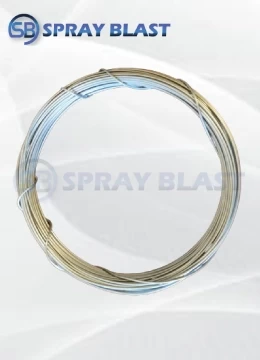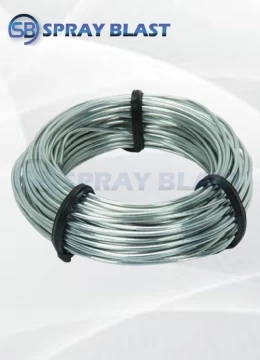
Corrosion Coatings
Babbitt Wire is sprayed to protect steel structures and vessels.
EnquireWire
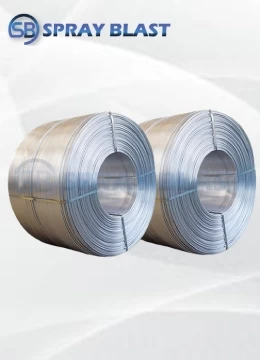
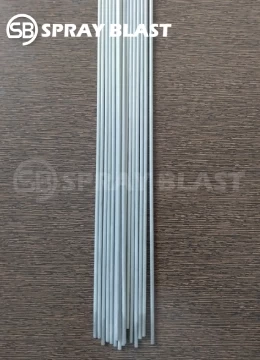
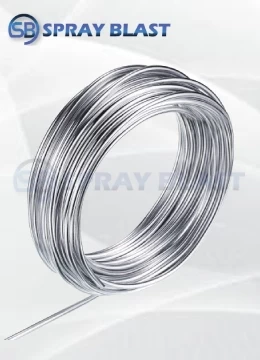
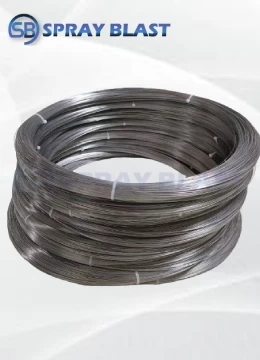
Babbitt wire is a type of metal wire used for thermal spray coatings that provide anti-friction and anti-seizing properties. It is made of an alloy of tin, copper, and antimony, with the addition of other metals such as lead, zinc, and cadmium.
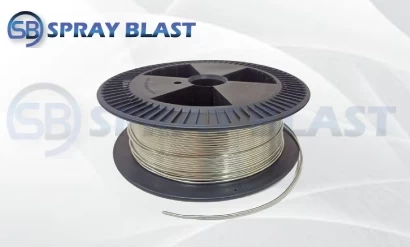
Browse full product photos, component close-ups, and application views.
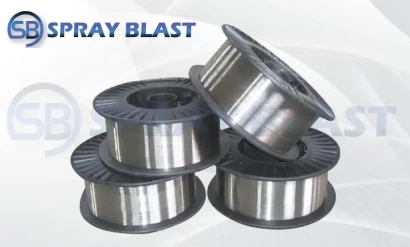
Review the key product specifications used for quotation and application planning.
Watch how the machine performs in real blasting and surface preparation conditions.
Babbitt wire is a type of metal wire used for thermal spray coatings that provide anti-friction and anti-seizing properties. It is made of an alloy of tin, copper, and antimony, with the addition of other metals such as lead, zinc, and cadmium.
Babbitt Wire is matched to the coating chemistry the job requires.
Wire is fed through the flame or arc spray gun drive rolls.
Flame or electric arc melts the wire as it reaches the nozzle.
Compressed air sprays molten droplets onto the prepared substrate.
Passes overlap until the specified coating thickness is reached.
Bond, texture, and thickness are checked before the part ships.
Babbitt wire is a type of thermal spray wire used for thermal spray coatings that provide anti-friction and anti-seizing properties. It is made of an alloy of tin, copper, and antimony, with the addition of other metals such as lead, zinc, and cadmium. Babbitt A is a high-quality, tin-based babbitt wire designed specifically for thermal spraying. Babbitt wire A coatings are highly ideal for high-speed and heavy-duty bearing surfaces that require the finest quality coatings, especially for essential applications. The coatings are ductile, have a low oxide content, and have a bright, metallic look.
Babbitt wire in India is commonly used in the manufacturing of bearings, bushings, and other sliding surfaces where low friction and high wear resistance are essential. It is also used in the repair and refurbishment of damaged bearing surfaces.
Babbitt alloys Wire is known for its hard/soft composition and offers corrosion resistance, good wetting, low wear, and friction resistance. While tin and lead are soft, copper and antimony crystallize to create hard crystals throughout the structure. The softer metal's wear provides for greater absorption of the lubricant and any foreign particles. Babbitt is used as a lining for cast iron, steel, and copper bearing shells. The Babbitt lining reduces friction and wear that occurs when a lubricant is unable to keep the bearing's moving components from welding together. As a result, the Babbitt increases the bearing's life.
The thermal spray process used to apply Babbitt wire is called the twin wire arc spray gun process. In this process, two wires of Babbitt alloy are fed into a spray gun, where they are melted and atomized using an electric arc. The molten Babbitt particles are then sprayed onto the substrate, where they solidify and form a dense, uniform coating.
Babbitt wire coatings are preferred over other types of coatings because they offer superior anti-friction properties, high load-carrying capacity, and excellent corrosion resistance. They also have good resistance to galling, which is a form of surface damage caused by the adhesion and sliding of two surfaces under high pressure. Babbitt thermal spray wires are intended for use with either an electric arc spray gun or a wire spray gun process.
To obtain good adhesion to the substrate using the thermal spray gun method, treading, and sand blasting machine were used. The tin layer was employed for casting, and the melting temperatures for tin and lead base babbitt were 500 and 300 degrees Celsius, respectively. Scanning electron microscopy (SEM) was utilized to examine a worn surface. To obtain a point analysis from the chemical composition, EDAS analysis was performed. After final machining, an ultrasonic test (A = 0, f = 4MHz, D = 10mm o) and a penetration test (penetrant: Red, spraying, 10min, 25°C & developer: Wet, 10min) were used to inspect the surface and thickness for cracks and porosity.
Babbitt wire is a type of alloy wire that is commonly used for bearings and other high-precision applications. Babbitt metalizing wire is composed of a mixture of metals, including tin, copper, and antimony, which are melted together to form a homogenous alloy. Some of the key features of Babbitt Wire include:
Overall, Babbitt wire in India is a high-quality material that is widely used in industrial applications due to its unique combination of properties. Babbitt wire price depends on the quality and quantity of Babbitt wire in India. Babbitt wire price is low compared to others.
Compare Babbitt Wire with other models in Wire.
| Specification | Metalizing Wire | This model Babbitt Wire | Alloy 625 Wires |
|---|---|---|---|
| Material | Zinc, Aluminium | — | — |
| Diameter | 6.00 mm To dia 1.20 mm. | — | 10 mm To 100 mm |
| Weight | 44lbs (20kgs) 450lbs (204kgs) | — | — |
| Packaging Size | 1/16"(1.6mm) (2mm) 3/32"(2.3mm) 1/8"(3.2mm) 3/16"(4.8mm) | — | — |
| Brand | Spray Blast | Spray Blast | Spray Blast |
| Country | India | India | India |
| Packaging | Spool Drum | 450 kg Metal Drum, 250 paper fibre drum, 70-100 Kg Pail Pack | — |
| Color | Silver | — | — |
| Delivery Time | 5-7 Days | 15-20 Days | 1 Weeks |
| Transport Type | Land / Sea / Air Transport | Land / Sea / Air Transport | — |
| Price Range | Rs 350 - 7900 /kg | Rs 2.3K /kg - 3.5K /kg | Rs 200 - 350 /kg |
| Product | — | Babbitt Wire | — |
| Metal - Alloy | — | Babbitt Alloy | — |
| Density | — | 6.43 or 6.67 g/cm3 | 8.4 g/cm3 |
| Melting Point (approx.) | — | 450 or 669 °F (232 or 354 °C) | — |
| Chemical formula | — | Sn or Sn 3.5Cu 7.5Sb | — |
| Usage | — | Corrosion protection, EMF/RFI shielding or bearing surfaces | — |
| Melting Point | — | — | 1.350 °C (2460 °F) |
| Tensile Strength | — | — | Psi – 1,35,000 , MPa – 930 |
| Minimum Order Quantity | — | — | 40 Kg |
| Production Capacity | — | — | 10 Tons |
Typical applications for Babbitt Wire across industrial blasting, coating, and surface preparation work.
Babbitt Wire is sprayed to protect steel structures and vessels.
EnquireWorn shafts or housings are built up with sprayed alloy.
EnquireA sprayed layer keys later ceramic or carbide coats.
EnquireProduction parts receive a consistent sprayed metal film.
EnquireField metallizing restores large steel assets.
EnquireSelected wires are used where sparking risk must stay low.
EnquireBabbitt and similar alloys rebuild white-metal surfaces.
EnquireNickel or molybdenum wires coat parts that see heat.
EnquireAnswer a few questions and we will suggest a starting configuration for Babbitt Wire — then confirm the exact specification with our team.
Clear answers on specification, usage, and what to expect before you request a quote.
Tell us the application, quantity, and delivery need for Babbitt Wire.
Tell us the product, application, quantity, or repeat supply requirement for steel shot, steel grit, garnet abrasive, glass beads, or related blasting media.